This is what your opening is really supposed to accomplish
This month, we’re kicking off a new four-part series here at Technica Editorial about drawing readers into your story and keeping them there.
Over the next few months, we’ll be looking at some of the biggest reasons readers put books down, and, more importantly, what you can do about it.
We’re starting out with the first five pages, then we’ll move into subtext, scene purpose, and pacing. Each topic builds on the one before it, and each will give you practical ways to strengthen your story from the perspective of the reading experience—from the first page through the end of every chapter.
Ready? Let’s dig in!
Have you ever wondered why one story immediately pulls you in while another simply doesn’t?
It all has to do with the opening pages.
Most writers think the first five pages are about grabbing the reader’s attention.
That’s certainly part of it. But we think there’s something even more important happening.
Most people have probably picked up a novel, read a few pages, and then set it aside. Sometimes we say to ourselves, “I’ll come back to it later.” Pretty often, we don’t, though, right? Raise your hand if you’ve done this. (🖐 We’re all guilty of it here in the Technica offices!)
As writers, we need to answer this question for readers:
Can I trust this author to take me somewhere worth going?
Trust us when we say we’ve seen this happen in manuscripts that are beautifully written. There’s polished prose and authentic dialogue. The premise is intriguing.
And yet…the opening (those first five pages) doesn’t quite invite the reader in.
Beautiful writing doesn’t automatically create an effective opening.
Think about it. An opening isn’t trying to prove how well you write. It’s trying to convince readers they’re going to get the reading experience they expect and want.
Don’t Try to Tell the Whole Story
One of the biggest misconceptions we see is that writers treat the first chapter more like an orientation session. They explain the world. They introduce every important character. They weave in backstory. They establish the rules.
In a nutshell, they want readers to understand everything before the story really ever starts.
The problem with that is that readers don’t pick up a novel hoping to understand everything immediately. They pick it up hoping to become curious enough to keep reading.
Here’s an analogy. You meet someone for the first time. If they spend the first five minutes telling you every detail of their life, you’re probably going to tune out—or worse, walk out.
But what if they tell you a captivating story instead? Now they’ve got your attention, don’t they?
Stories work the same way. Your opening isn’t there to explain your novel. It’s there to make readers want another page.
Curiosity Builds Trust
One of the biggest fears we’ve seen writers have is that they’re confusing readers. But when we try to explain things to avoid confusion, we often create the opposite problem. Too much information can make it difficult to know what’s important.
Readers enjoy putting pieces together. We all like making connections, don’t we? We like feeling as though we’re discovering the story alongside the characters.
So instead of asking, “Have I explained enough?”
Try asking, “Have I made readers curious enough to keep going?”
Every Opening Makes a Promise
Whether you realize it or not, your first pages are making a promise. See our resource on Genre Expectations at a Glance.
The bottom line is that readers aren’t expecting you to reveal the entire story. What they want is reassurance that you’re delivering the experience they came for. That reassurance comes from all the small choices you make as a writer:
- Your voice.
- Your pacing.
- Your point of view.
- Your tone.
- Your character.
- Your clarity.
None of these things have to be perfect, especially individually. But when woven together, they tell readers, “Relax. I’ve got this.”
That’s what trust feels like on the page.
How to Evaluate Your Opening
We’ve found that many writers evaluate their first chapter by asking questions like:
- Is it exciting enough?
- Does enough happen?
- Should I add more backstory?
- Should I explain this better?
Those aren’t bad questions. We just think there are better ones.
Try asking yourself:
- Have I given readers a reason to care about this character?
- Have I created one compelling question they want answered?
- Does the opening clearly signal the kind of story they’re reading?
- Does the pacing invite them forward?
- Have I earned another chapter?
Do you see the difference? The second set moves the focus from information to reader experience.
So What Should the First Five Pages Actually Do?
Instead of trying to accomplish everything, think about a few very specific things. By the end of the first five pages, readers should have a sense of…
- Whose story they’re reading?
- What kind of world they’re entering?
- What’s beginning to disrupt normal life?
- Why they should care?
- What’s one question they want answered?
What they don’t need to understand is the complete backstory or the world history or all the supporting characters. Readers don’t need all the answers yet; they just need confidence that the answers are coming.
A Quick Reality Check
Here’s a simple exercise we often recommend at Technica Editorial.
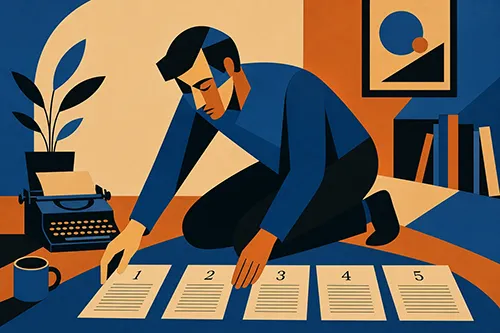
Give your first five pages to someone who hasn’t read your book.
When they’re finished, ask only these questions:
- Who is the main character?
- What do they want?
- What’s standing in their way?
- What question are you hoping the story answers?
- Would you keep reading?
How they answer will be so much more revealing than them saying whether they “liked” it or not.
If they struggle to answer those questions, there’s a good chance your opening isn’t making the promise you think it is.
Big Technica Takeaways
- Readers decide surprisingly quickly whether they’ll continue.
- Strong openings earn trust before they deliver answers.
- Curiosity creates momentum.
- Every opening makes a promise.
- Focus on reader experience rather than explanation.
Here at Technica Editorial, we spend a lot of time helping writers strengthen individual scenes and chapters, but first pages deserve special attention. They aren’t a test of your talent. They’re your opportunity to invite readers into a relationship you hope they’ll stay in for the next 300 pages.
Have a wonderful month!
The Technica Editorial Team
P.S. Be sure to download this month’s companion resource, Would You Keep Reading? A First Five Pages Diagnostic for a practical checklist that will help you evaluate your opening—and reach out for a consultation!