Peer review is one of the cornerstones of scholarly publishing. Before research is accepted for publication, experts must assess its quality, originality, methodology, significance, and contribution to the field. Depending on the publisher or the subject matter, journals use several different models, although some form of blinded peer review is usually the default for most journals.
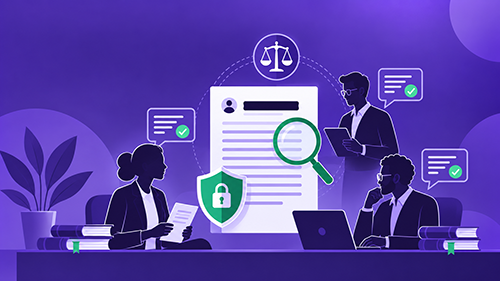
Blinded peer review is designed to reduce the influence of personal identities on editorial decisions and limit conflicts of interest. Depending on the model, either the reviewer does not know the author’s identity, or both the reviewer and author remain anonymous to one another. While blinding can help promote fairness and reduce bias, it is not a perfect solution. Like virtually every aspect of scholarly publishing, it comes with advantages and limitations.
What Is Blinded Peer Review?
In a single-blind review, the reviewers know the identity of the authors, but the authors do not know who reviewed their manuscript. This remains one of the most common peer-review models. It enables reviewers to review the manuscript without fear of retaliation for potentially negative reviews but relies heavily on reviewers declaring conflicts of interest before beginning their review.
In a double-blind review, both sides are kept anonymous. Reviewers do not know who wrote the manuscript, and authors do not know who reviewed it. The intention of this model is to ensure that the manuscript is judged primarily on its content rather than the reputation, institution, career stage, gender, or other characteristics of its authors. It attempts to eliminate all conflicts of interest through complete anonymity.
Some journals also use variations of these approaches, while others have moved toward open peer review, in which reviewer identities, reports, or both may be disclosed.
The debate over blinded peer review therefore centers on a fundamental question: Does anonymity make scholarly publishing fairer?
The Pros of Blinded Peer Review
Reducing Personal Bias
As already noted, the biggest argument for blinded peer review is its potential to reduce bias. Reviewers can, consciously or unconsciously, be influenced by an author’s identity.
Knowing that a manuscript was written by a prominent researcher at a prestigious university may create positive expectations. Conversely, a manuscript from an early-career researcher, unfamiliar institution, or lesser-known research group might receive a more skeptical reading.
In particular, double-blind review attempts to remove these conflicts from the equation. Ideally, reviewers use their expertise to evaluate the research itself rather than the person behind it.
This can be particularly valuable in fields where academic reputation and institutional prestige carry considerable weight.
Creating a More Level Playing Field
Blinded review can provide greater opportunities for early-career researchers and authors from less-established institutions.
A famous researcher does not necessarily produce better research than an unknown researcher. Yet, reputation can influence expectations. Removing the author’s name and affiliation can help ensure that a manuscript receives serious consideration based on its arguments, evidence, and methodology.
For researchers trying to establish themselves, this can make the publication process feel somewhat less dependent on academic pedigree.
Encouraging More Objective Evaluation
Anonymity can encourage reviewers to focus their reports on the manuscript’s strengths and weaknesses.
Reviewers may feel more comfortable providing critical (sometimes even negative) feedback when they know their identity will not be revealed to the author. This can produce more candid assessments, which are particularly important when a manuscript contains substantial methodological problems or unsupported conclusions.
At its best, blinded peer review encourages reviewers to ask a straightforward question: Is this research good enough to publish?
Protecting Reviewers
Anonymity can also protect reviewers from potential professional consequences.
Academia is a relatively interconnected world. Many researchers will change institutions multiple times in their career. Researchers may also review manuscripts written by colleagues, competitors, senior scholars, or people who could influence their careers. Anonymous reviewing can make it easier to provide honest criticism without worrying about damaging professional relationships.
This protection is especially relevant when the review is strongly negative.
The Cons of Blinded Peer Review
Anonymity Does Not Eliminate Bias
The greatest weakness of blinded peer review is that removing an author’s name does not magically remove bias.
Reviewers can still make assumptions based on writing style, subject matter, methodology, citations, institutional clues, or the research topic itself. In highly specialized fields, reviewers may even recognize the authors simply from the research or the writing style.
A manuscript may also contain references to previous work by the authors, descriptions of research projects, datasets, laboratories, or other clues that make anonymity difficult or even impossible to maintain.
Consequently, double-blind review is often better understood as bias reduction rather than bias elimination.
True Anonymity Can Be Difficult
Maintaining anonymity is particularly challenging in small or highly specialized research communities.
Imagine a field with only a handful of research groups working on a very specific topic. A reviewer may recognize the project from the methodology, dataset, or previous conference presentation by the end of the Abstract. This is particularly common in more specialized social science or liberal arts subjects that are seeing cuts at most major universities.
In some disciplines, researchers post preprints, present findings at conferences, or discuss projects publicly on social media, all of which will make it into a research paper. These practices can make it increasingly difficult to maintain genuine anonymity.
Less Transparency
Another criticism is that blinded peer review can make the process less transparent.
Open peer review advocates argue that readers and authors should know who evaluated a manuscript and, potentially, be able to see the reviewers’ reports. Disclosure can create greater accountability and give reviewers credit for the intellectual work involved in peer review.
Anonymous review, by contrast, keeps reviewers largely invisible. While that protects reviewers, critics argue that it can also make it harder to identify potential inappropriate behavior or conflicts of interest.
Accountability Can Be a Concern
Anonymity may occasionally give reviewers too much freedom.
Most reviewers take their responsibilities seriously, but anonymous systems can potentially facilitate unnecessarily harsh, dismissive, or unconstructive comments. Additionally, there are growing concerns about reviewers using AI to help generate content. If reviewers know their identities will never be revealed, there may be fewer perceived consequences for poor reviewing behavior.
Open review can create a stronger incentive for reviewers to make their assessments professional, evidence-based, and constructive.
Of course, removing anonymity creates its own problems. Reviewers may become reluctant to criticize influential researchers if they know their names will be attached to their reports. The question therefore becomes one of balancing accountability with independence.
Is Blinded Peer Review Still the Best Approach?
There is no universally perfect peer-review model. Blinded review offers meaningful protection against certain forms of bias, but it cannot eliminate every source of subjectivity. Open review provides greater transparency and accountability but may introduce different forms of bias and professional pressure.
The best approach may therefore depend on the discipline, journal, research community, and purpose of the review process.
For journals using blinded review, transparency about the process is still important. Authors should understand what information is hidden, how reviewers are selected, how conflicts of interest are handled, and what standards reviewers are expected to follow.
At the same time, publishers should recognize that anonymity is only one tool for improving fairness. Reviewer training, diverse editorial boards, clear evaluation criteria, conflict-of-interest policies, and efforts to reduce systemic bias can all contribute to a stronger peer-review system.
Conclusion
Blinded peer review has survived because it addresses a genuine problem in scholarly publishing: people can be influenced by who conducted research, where they work, and what they already know about them. By concealing author identities, particularly through double-blind review, journals can reduce some of these influences and create a more equitable evaluation process.
However, anonymity is not an all-encompassing shield against bias. Reviewers can sometimes identify authors, unconscious assumptions can persist, and excessive anonymity can reduce transparency and accountability.
Ultimately, the goal of peer review should not simply be to keep identities hidden. It should be to create a process in which high-quality research receives a fair, rigorous, and constructive evaluation. Blinded peer review can be an important part of that process, but it works best when combined with thoughtful editorial policies and a broader commitment to fairness, integrity, and transparency in scholarly publishing.