Readers no longer want to know only your books. They want to know you. While an author’s main occupation is writing and publishing books, the books themselves should not be the only way authors engage with their readers. Authors should also visibly, directly engage with their readers, so readers can know the person behind the words. Fortunately, here are 4 effective ways to build those relationships. Though the first option is remote, the other three options allow authors to get up close and personal with their fanbase.
1. Use TikTok to Join the Conversation
TikTok is a good engagement option for all authors, but especially good for authors who wish to engage with their readers but are uncomfortable meeting them in person.
Here are some effective strategies for authors to engage on TikTok:
Embrace Reader Perspective: Authors can best engage with readers on TikTok by performing in videos as fellow readers, rather than as self-promoting authors. Therefore, they should come across as enthusiastic as their most enthusiastic fans and focus on engagement-oriented videos over informative ones.
Create Engagement-Oriented Content: These can include silly games such as reading one-star reviews or guessing a book title from a description or quote; reviewing or recommending other books; videos responding to another content creator; or showing off bookshelves and other personal environments (including pets!).
Incorporate Visuals: Authors should include visual elements such as bookshelves to show their readers how much they love reading and writing, and they should include music and sound effects to maintain audience engagement and work with the TikTok algorithm (through leveraging built-in interest clusters).
Use Hashtags and Booktok: Authors should also tag videos with the hashtag #booktok (Booktok is the nickname for the literary side of Tiktok), incorporate book covers in TikTok marketing (especially in cover reveal videos), and regularly engage with other “BookTokers.”
Most importantly—be authentic.
2. Start Small with Local Book Signings
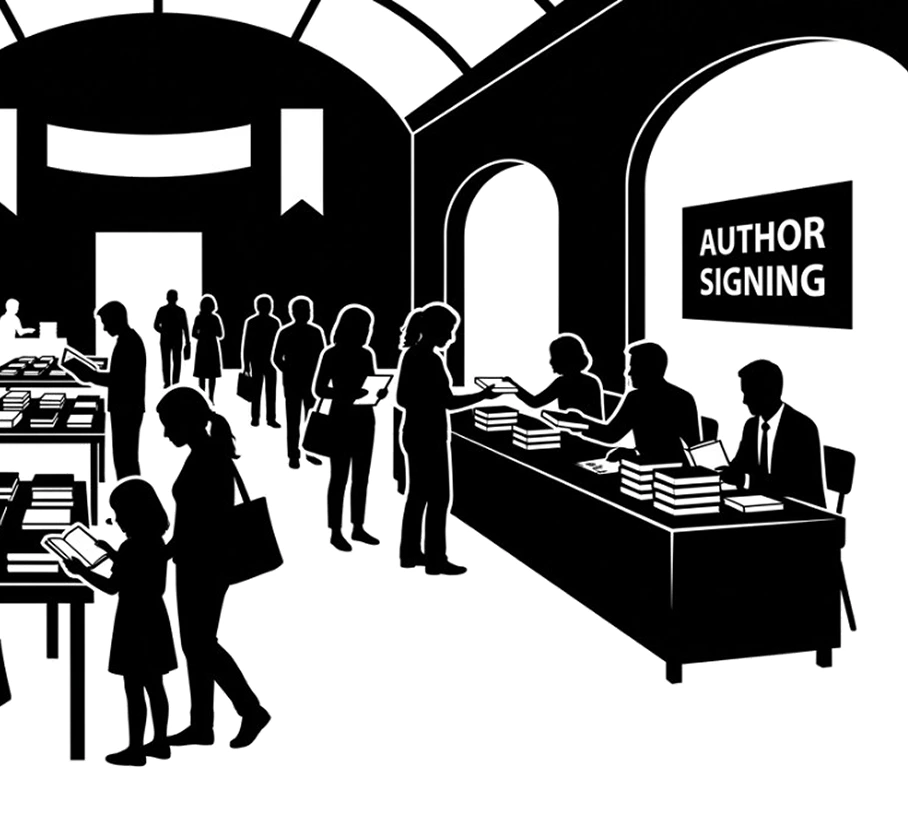
For introverted authors or those who wish to gradually ramp up in-person engagement with readers, book signings provide great opportunities for this acclimatization. Usually held at bookstores, they can accommodate a limited number of attendees and usually last only one to two hours. When engaging with readers at book signings, authors may open the event with a brief introductory discussion of their book and/or the author’s writing journey, followed by a reading of between one and three passages from the book, and ending with a question-and-answer session. If possible and desired, authors can replace the introductory discussion with an interview with a bookstore representative or other representative from the literary world.
During the signing itself, authors should be friendly when engaging with the readers who approach their table, smiling and verbally welcoming them. Authors should likewise sign their name with a friendly salutation (such as “Thanks” or “Best Wishes”) on the title page, and they should ask if the reader would like them to personalize the book. Large events will provide a representative who asks readers in line if they would like the book personalized, and they will then print the name on the sticky note and affix it to the page to be signed. Authors may also choose to write a message related to a character from the book. Remember to thank each reader as they leave.
3. Literary and Fan Conventions
For authors who are ready and willing to interact with a larger audience over a longer period, literary or fan conventions are great opportunities to meet their readers. The signing experience is nearly identical to that at a bookstore signing event, but conventions allow authors to host their own dedicated booth. At the booth, authors may include large signage to attract convention attendees, as well as promotional items such as bookmarks, buttons, or unique merchandise such as t-shirts or candles (as described in my blog post on author merchandise) to encourage conversation and purchases. Authors may also wish to keep several business cards ready, advertising their author website or their online retailer pages. All of these should include QR codes that link to this information (a QR code—quick response code—is a barcode that stores data in a pattern of black and white squares). Booth visitors will need to scan the QR code with a smartphone camera or within a specialized QR code scanning app in order to view the encoded information. Authors can ask visitors at the booth how they are enjoying the convention, what their favorite panel has been, and other relevant questions.
Conventions also offer photo opportunities for authors’ fans, who have come to expect such opportunities at these larger events. Authors should decide how they want to pose for these photos based on their comfort levels (selfies with either the author or the fan holding the phone, full photos taken by another person, with or without bodily contact, etc.). Most authors offer these photo opportunities free of charge to fans, but some may charge a fee based on personal preference or the fee set by their representatives (managers, publicists, or publishing house employees).
Because lines are often much longer at conventions than at bookstore signings, authors must take care to keep fan interactions brief in order to help ensure that everyone in line gets the chance to meet them.
4. Speaking Engagements
If authors are signed to major publishers, they might have the opportunity to speak to universities, corporations, and other organizations. These speeches are often motivational, so it is important that authors craft them to emotionally connect with their audiences. Therefore, instead of memorizing their speeches word for word, and risking sounding overly rehearsed or performative, they should outline major points and rehearse them impromptu so they can speak conversationally to their audience on the day of the speech. Still, authors should rehearse their speeches often and record them in front of a camera to identify problems such as awkward pacing, filler words (uh, um, like), and nervous gestures (fidgeting, shrugs, etc.). On the day of the speech, authors should replace awkward pacing and gestures with deliberate footsteps and emphatic hand gestures. To connect with their audience, authors should maintain eye contact with specific audience members (at least for a few seconds at a time), speak confidently, and weave humor and other lighthearted emotions into their speech. If authors want to go a step further, they can draw lessons from their novels into their speech messaging.
Conclusion
Regardless of the engagement strategies an author chooses, directly connecting with their readers can greatly benefit the current audience and potentially attract new readers in the future. When readers meet and interact with an author, they often feel a stronger connection, making them more likely to purchase the author’s books again. This interaction not only enhances the reader’s experience but also helps authors expand their readership and increase their income. Thus, direct engagement proves to be mutually beneficial.
By Matt Wade