Movies seasons come and go, but great books about movies never leave readers!
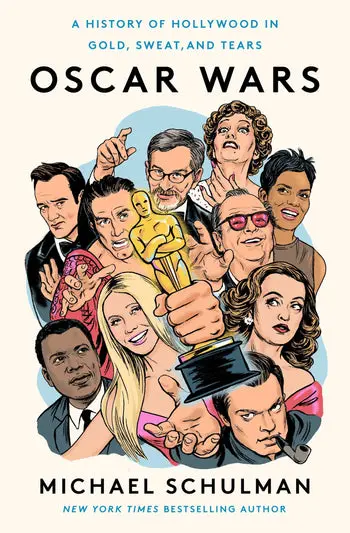
Oscar Wars: A History of Hollywood in Gold, Sweat, and Tears
By Michael Schulman
It was the best of movies, it was the worst of fighting about movies, it was the cinema of wisdom, it was the filming of foolishness, it was the epoch of belief in the power of cinema, it was the epoch of skepticism that movies still had meaning, it was the Oscars season, time and time again. When (what should be) the best of the year’s films clash, some epic drama is in the making. Sometimes, it’s a battle of eras in cinema; sometimes, it’s a battle of egos; sometimes, it’s a battle of what should qualify as “best” when two very different movies both want the title. But for each recounting, Michael Schulman and Oscar Wars are there to inform and entertain both.
There have been multiple points where the larger world has intruded on Hollywood and the Oscars, including the years of blacklisting over supposed ties with Communists and “anti-American” activists. Generation gaps’ impact on movies was slower to show itself at the Oscars, but while waiting for “official” recognition and applause, it helped invent a new ratings system. And in 2017, the famous #OscarsSoWhite and envelope-snatching moment that showed how recognition and representation still had so far to go, but both were literally barging their unexpected way into an old-fashioned ceremony. But some fights are more “mundanely” dramatic, such as the no-holds-barred behind the scenes battle of 1999 between war epic Saving Private Ryan and historically inaccurate romance Shakespeare in Love—just one example of how studios have fought dirty to win the gold. But, even amidst the dirt and grime, whether the stories are fictional or real, this book is always pure gold.
Pictures at a Revolution: Five Movies and the Birth of the New Hollywood
By Mark Harris
There are plenty of memorable years to stand as cultural watershed moments in cinema, but Mark Harris’ tribute to the films Bonnie and Clyde, The Graduate, Guess Who’s Coming to Dinner, In the Heat of the Night, and (the oddball disaster of the bunch) Doctor Dolittle as they made their way from production to the 1967 Oscars is exceptionally thorough and well-written, making a strong case for 1967 as a cultural watershed. The concept of “New Hollywood”, an era fresher and more colorful than one censored by the Hays Code, seems fresher and more vivid when it comes through with such engaging writing and intense and thoughtful stories that helped breathe new life into a brave new world.
Both In the Heat of the Night and Guess Who’s Coming to Dinner talked about diversity and prejudice in a serious way, albeit in distinctly different genres, and starred Sidney Poitier, who’d already broken old Hollywood tradition by winning Best Actor a few years earlier. Bonnie and Clyde played its narrative and the on-screen portrayal just as dangerous, violent, and thrill-seeking as its characters (“we rob banks”); The Graduate tackled the serious subject of generation gaps, sometimes through distinctly shady relationships in its plot. And Doctor Dolittle…did little, and the little it did, the book admirably displays and expands upon. Pictures at a Revolution is more than informative, better than enjoyable, and smart and fun all-around, worth a read inspiring plenty of watches.
By Esther Zuckerman
The rom-com genre is one that audiences keep falling for, enduring across eras, cultural shifts, stars coming and going, and rising and falling of love. On behalf of Turner Classic Movies, Esther Zuckerman makes it easy for readers to share that passion, screen not required. Whether it’s the earlier classic rom-coms such as The Philadelphia Story or more modern movies that bring (overdue) diversity to the screens of love; whether it’s the personalities that reoccur through the ages such as the High-Maintenance Woman and the Man in Crisis; whether it’s the chemistry of stars that have brought movies to (love)life such as Hepburn & Tracy to Sandler & Barrymore—all those and so much more are enough to sweep any reader to Cloud Nine, or their screen to get started on delightful discoveries or rewatches.
There are plenty of delightful discoveries simply in Falling in Love at the Movies, through the insight that Zuckerman brings to the book, driven by a clear personal love for a genre that’s plenty flawed but still endures. Perhaps the reason that the rom-com endures, powering through cultural slumps and box office flops, is that the genre is, at heart, about the art of being happy. Problems can usually be solved with the right amount of introspection, insight, heart, and humor that both make a great plot and a great resolution. And, in this case, a great book.
By Jeanine Basinger and Sam Wasson
The transcript format of this long (but never boring) book helps provide the feeling of watching a documentary, and with so many voices and perspectives well-organized and presented thanks to Jeanine Basinger and Sam Wasson, it’s easy to see all the events recounted unfolding as the pages turn. Sometimes, the history of a thing is even more intriguing than the thing itself, and the history of Hollywood is neck-and-neck with its own products as the years have rolled on. Every era (from perhaps the birth of Universal Studios in 1914-1915 to modern directors’ discussions on what the future holds), every star offscreen and on (the double-column list of those whose words made it into the book is enough to fill seven pages), everything any reader could have needed or wanted to know, it’s all in this absorbing book.
Basinger and Wasson’s history is especially impressive when considering that a large section of the people who participate actively in this history are deceased; the book uses various archives and oral histories, predominantly from the AFI, to make sure their voices are not lost to time or forgotten in these pages. Even when someone doesn’t get “their turn” to speak, the stories are still told directly by their fellows or indirectly as part of that larger narrative. And what a narrative—worthy of Hollywood.
By Grace Dietz