| |
|
|
|
|
This month, we’re looking at how authors can use the slower summer publishing season wisely—not as lost time, but as valuable preparation time. Inside, you’ll find practical guidance on strengthening your query, refining nonfiction proposals, polishing submission materials, and making a stronger first impression when the pace picks back up. We’re also sharing a book proposal review, a look at the renewed power of publishing backlists, a recent Technica project spotlight, and author resources to help you keep moving forward with confidence.
Happy Reading!
|
|
|
|
The Smart Way to Use the
Summer Months
|
|
There’s an unspoken, yet
understood, rhythm to publishing that most people don’t talk about until they’ve been in the industry
for a while. Deadlines ebb and flow, editors juggle multiple projects, agents
manage full client lists, and certain times of year feel distinctly quieter
than others.
Summer is one of those
times.
This doesn’t mean the work stops, but it
does mean the pace changes. Response times stretch out (sometimes endlessly),
people head off for vacations, conferences, and long weekends, and everything
just…Slows. Down.
We know a lot of authors who feel
frustrated by this, but we believe in that old adage: When you have a bunch of
lemons, make lemonade.
Translation: Since you can’t change the summer slump
in the publishing industry, you might as well use it to your advantage.
At Technica
Editorial,
we often encourage writers to think of summer as a workshop season. It’s a stretch of time when
you can let the quieter pace give you breathing room to do the things that are
often, otherwise, glossed over.
Since there is no reason to rush or panic,
there is every reason to slow down, evaluate, and prepare.
Step Back Before Stepping
Forward
When writers finish a manuscript, the
natural instinct is to send it out immediately. We’ve all been there! The
work is done and your excitement is real. The next step feels obvious, doesn’t it?
But sending too soon is actually one of
the most common missteps we see. It’s not because the writing is weak, but
rather because the submission materials haven’t had time to mature.
The Takeaways
•
A
little distance can sharpen your judgment.
•
A
little patience can improve clarity.
•
A
little revision can make a big difference.
The
Query
Let’s look at the query,
which is always step one in the pitch process.
A query letter isn’t just a description of
your book; it’s
a positioning statement.
It tells an agent or editor:
•
What
kind of story this is
•
Who
it’s for
•
Why
it belongs in the market
Clarity matters more than cleverness, so
instead of focusing on sounding impressive, focus on being understandable. You
want prospective agents or editors to immediately understand your story.
Strong queries tend to
share a few common traits
•
A
clear protagonist with a defined goal
•
A
problem that creates tension
•
Stakes
that feel specific and meaningful
•
A
tone that reflects the genre
And just as important (or maybe even more
so!), they leave the reader wanting more. There is no place for confusion.
The Takeaways
•
Focus
on clarity over complexity
•
Keep
the spotlight on the central conflict
•
Make
the stakes easy to understand
•
Let
the story speak for itself
A Look at Nonfiction
Proposals
Nonfiction proposals operate on a slightly
different track. They’re
less about narrative and more about direction. Editors want to see how the book
fits into the larger conversation and why readers will pick it up.
Preparation here matters most of all.
Strong nonfiction
proposals usually demonstrate
•
A
clearly defined audience
•
A
specific problem the book addresses
•
A
practical structure for delivering value
•
A
realistic understanding of the market
This is the kind of work that benefits
from time and reflection, not urgency.
The Takeaways
•
A
proposal is a roadmap, not just an idea
•
Audience
clarity is essential
•
Market
awareness strengthens credibility
Standing Out
Standing out as an author isn’t about the dramatic
twist or flashy pitch.
More often than not, what stands out is
your professionalism. Editors and agents notice when a writer:
•
Submits
clean, polished materials
•
Follows
directions carefully
•
Understands
their category
•
Communicates
clearly
•
Demonstrates patience
These qualities signal readiness, and the
truth is, agents and editors want to work with authors who are professional,
who demonstrate readiness to work, and who present quality, polished work right
out of the gate.
How to Use the Summer
Months
Instead of thinking of the summer months
as wasted time, use this season to strengthen the things that support your
manuscript.
Here are a few productive ways to spend
the time:
•
Revisit
your opening pages with fresh eyes
•
Refine
your book description until it feels precise
•
Research
publishing professionals who represent your type of work
•
Study
recent titles in your category
•
Seek
thoughtful feedback from a trusted reader
•
Set
a realistic submission timeline for early fall
These might not be flashy or expeditious,
but they are effective.
The Takeaways
•
Small
refinements create stronger submissions
•
Research
builds confidence
•
Preparation
reduces uncertainty
_______________
Big Summer Takeaways
•
Summer
in publishing often moves at a slower pace
•
That
slower pace gives you valuable preparation time
•
Strong
submissions come from thoughtful revision
•
Professionalism
and clarity help writers stand out
•
Readiness
matters more than speed
Here’s something we remind
writers of often at Technica Editorial:
You
only get one first impression with a submission.
Taking a little extra time to refine your
materials isn’t
a waste of time or a delay. Think of it as an investment in your work. We
recommend using this mid-year season wisely.
•
Strengthen
your pitch
•
Clarify
your message
•
Give
yourself the confidence that comes from knowing you’re truly ready
If you do this, when the publishing pace
picks up again, you won’t
be scrambling…you’ll
be prepared.
_______________
Cheers to making lemonade!
Technica Editorial
Use our Spring Mini Reset Guide to help you
navigate through the summer months, click here to download and read.
Review our resources on The Art of Pitching, click here:
And
A Guide to Queries and Proposals, click here
|
|
|
|
|
|
|
|
|
|
Book Review: The Book Proposal Book: A Guide for Scholarly Authors By Grace Dietz
|
|
How to get started on getting started.
Many scholars—whether newbies or old-hands with writer’s
block—easily get stuck when the time comes to present their book pitch to
scholarly publishers. Writing eloquently to make a good case for a book pitch
is already difficult, but it becomes even more stressful when a scholar tries
to consider what an editor will decide and why. Even though a publishing
professional will try to judge a potential book on its own merits, patterns
still emerge in what projects make the cut. There’s no clear-cut solution or
series of answers, no one-size-fits-all…but handbooks like Laura
Portwood-Stacer’s The
Book Proposal Book: A Guide for Scholarly Authors are there
ready to educate and assist those who’ve gotten stuck or turned around trying
to reach their goal.
To read more, click here
|
|
|
|
|
|
What’s Old Is New Again: The Rise of the Backlist in Publishing By Chris Moffitt |
|
For much of publishing history, success was defined by the
“frontlist”—the shiny parade of new releases that arrived each season with
marketing fanfare and bestseller ambitions. Backlist books—titles published
more than a year or two ago—were often treated like quiet retirees, sitting on
shelves and generating modest, if any, ongoing sales.
However, what’s old is new again: The backlist has stepped
out of the shadows and into the spotlight. And it’s not just for nostalgia
reasons, the backlist’s resurgence is reshaping the publishing industry.
To Read, click here.
|
|
|
|
|
|
|
|
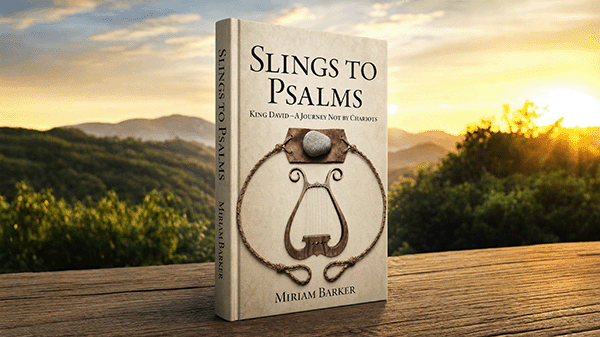
Slings to Psalms: King David—A
Journey Not by Chariots
The Technica Author Services team has been excited to work
with author Miriam Barker on her monograph, Slings to Psalms: King David—A
Journey Not by Chariots. Technica edited the text, designed the book’s cover
and interior, composed the interior pages, created print files, and assisted
with file uploads to Lulu.com.
|
|
|
|
|
|
Looking to finally finish that manuscript you’ve been working on? Take the next step. Technica Editorial offers editorial support including copyediting, developmental editing, interior page layout and design, cover art, and more. Contact us! |
|
|
|
|
|
Seeking additional guidance or inspiration?
Explore our Resources for downloadable author guides and tools! |
|
|
|
|
|
|
|
|
|
|
|
|
|
|
|
|



.png)