| |
|
|
|
|
In this issue, join us as we learn how to push past the middle slump of our story and drive it forward. We’ll also share tips on crafting powerful AI prompts that can guide you through the market maze with confidence. We share how authors can step into the spotlight as influencers, shaping narratives beyond the page.
Our project spotlight:
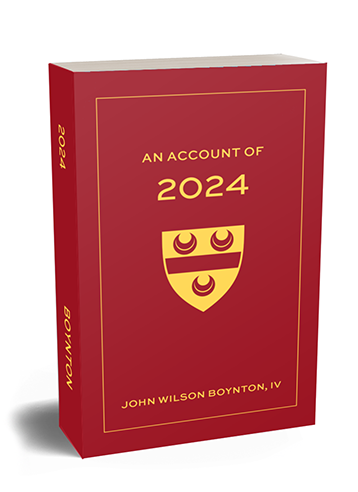
We helped John Boynton publish his personal journal for 2024.
Technica
designed the book’s cover and interior, composed the interior pages,
created print files, and assisted with file uploads to Lulu.com
Spring Into Savings: Check Out Our Springtime Special! Happy Reading!
|
|
Spring Into Savings: Check Out Our SpringSpecial!
Code: INDIE35
Click here to upload your manuscript for a quote, contact us here via email, or call us at 919-869-7977 |
|
|
|
|
|
|
|
How to Push Through the
Sagging Middle of Your Story
|
|
We’re closing in on the
middle of 2026—how did that happen?! Time passes quickly, but that’s a topic
for another time. Today, let’s talk about the middle of a story.
The beginning of a story is exciting. It’s where ideas are fresh
and energy is high.
The ending is satisfying. It’s where everything
finally comes together.
But the middle is another matter.
The middle is that long stretch where
momentum can slow, confidence can wobble, and the story can suddenly feel so
much harder than it did just a short time ago.
At Technica Editorial, we hear this all
the time in late spring and early summer:
“I was so excited when I
started.”
“I
knew exactly where the story was going.”
“Now
I feel stuck.”
If any of this sounds familiar, take a
deep breath. Count to 5. Exhale. And remind yourself that you’re not doing anything
wrong. In fact, the slumping middle is one of the most predictable moments in
the writing process.
It’s also the time when the real work
begins.
Why the Middle Often Feels Slow or Meandering
The beginning is driven by discovery, and
the ending is driven by resolution. But what about the dreaded middle?
The
middle is driven by pressure. But pressure is uncomfortable and that
stops a lot of writers from increasing it. (For more on tension vs pressure, click
here to watch this video.
Here’s a typical scenario: the
initial idea inspired you and carried the story this far, but now the character
has to struggle, make harder choices, and face consequences, and suddenly
you’re stuck. That’s
when the momentum slows because writing starts to feel less like inspiration
and more like…well…effort.
That shift can feel very discouraging for
writers (raise your hand if you’ve been there ✋🏼 ), but at Technica
Editorial, we see this shift differently. We see this shift as a sign that the
story is deepening; and more than that, it’s an opportunity to dig
in and up the stakes.
The Takeaways
• The middle isn’t supposed to feel easy
•
Slowing
down doesn’t
mean the story is failing
•
Discomfort
often signals growth, both in the story and the writer
How to Introduce Complications Instead of Filler One of the biggest reasons a middle
section drags is pretty simple: there is not enough change.
Characters talk. They travel. They think.
They revisit the same problem from different angles.
But in actuality, despite all of the
above, the situation stays the same.
The fact is that strong middles are built
on complications. That means new obstacles that you, the author…the architect
of the story…introduce, make the protagonist’s ultimate goal harder to
reach.
Think of complications as tightening the
screw. You can’t
relent and make things easier for your characters. You have to keep upping the
pressure. (For more on stakes, click here to watch this video.
Instead of filler scenes
like:
•
Characters
discussing the problem (again)
•
Repeating
information the reader already knows
•
Moving
from place to place without consequences
Try adding complications
like:
•
A plan fails
•
A
secret is revealed
•
A
new obstacle appears
•
An
ally becomes unreliable
•
A
choice leads to unexpected consequences
Every
complication should make the path forward more difficult.
The Takeaways
•
Something
consequential should change in each scene
•
New
problems create momentum
•
Consequences
keep readers engaged
Raising Stakes Without Forcing Drama
Not every story needs explosions,
villains, or life-or-death danger, but every story does need stakes.
Stakes answer one simple question:
What
happens if the character fails? Sometimes writers try to fix a slow middle
by adding bigger action. That can work, but more often the real solution is
emotional, not physical.
You don’t need louder conflict;
you need clearer consequences.
Ways to raise stakes
naturally
•
Increase
the cost of failure
•
Introduce
time pressure
•
Complicate
relationships
•
Reveal
hidden risks
•
Force
the character to make a harder choice
The key is escalation, not chaos. (Click here to watch this video on emotional
repetition to go deeper into this idea.)
The Takeaways
•
Stakes
are about consequences, not spectacle
•
Emotional
stakes can be just as powerful as physical ones
•
Each
new challenge should feel harder than the last
Identifying the Midpoint Shift
The midpoint is the moment when the story
changes direction. In other words, it’s
where the character stops reacting and starts acting. That could mean:
•
There
is a discovery
•
There
is a loss
•
A
decision is made
Regardless, the change always creates
movement. If your story feels stuck, check your midpoint and ask yourself:
•
Has
something significant changed?
•
Does
the character have new information or motivation?
•
Is
the goal clearer…or more urgent…than before?
If the answer to these questions is no,
the story may still be circling instead of moving forward.
The Takeaways
•
The
midpoint is a major turning point, not just another event
•
It
should shift the character’s
understanding or strategy (which takes the story in a new direction)
•
It
should push the story toward the ending
Keeping Reader Momentum Strong
Momentum isn’t about speed; it’s about progress. Readers
keep turning pages when they sense movement. That means each scene brings the
protagonist closer to an answer, a revelation, or a decision. These are what
the reader is invested in.
One simple way to check momentum is this:
At
the end of each scene, ask yourself: What has changed?
If the answer is nothing, that scene
likely needs strengthening. On the other hand, if the answer is clear, then the
story is moving. Yay!
Ways to maintain momentum
•
End
scenes with a question or decision
•
Reveal
new information gradually
•
Let
consequences unfold
•
Keep
the character pursuing a goal
•
Avoid
repeating the same emotional beat
The Takeaways
•
Progress
keeps readers engaged
•
Change
creates momentum
•
Questions
drive curiosity
The Truth About the Middle
Here’s something essential we
remind writers of often at Technica Editorial: the middle is where
characters struggle, where stakes rise, and where transformation begins.
The
middle of a story isn’t
where things fall apart;
it’s where the story earns
its ending.
If your manuscript feels messy right now,
it’s okay! You’re probably exactly where
you need to be, and now you know what to do to tidy up that mess.
Big Takeaway
The
middle isn’t
a problem for you to survive; it’s
an opportunity to strengthen your story.
Instead of asking, “Why is this so hard?”,
try asking, “What new pressure can I
introduce next?”
That one question can move your story
forward faster than anything else.
Happy
Writing!
Technica
Editorial
|
|
|
|
|
|
|
|
|
|
The Power of an AI Promptby Arlene Furman
|
|
What’s in an AI Prompt? Recently, I took a class, Advanced AI Prompting for Editors, through AI for Editors, taught by Erin Servais. It made my head hurt a bit, but I learned that AI tools are effective only with clear instructions. A well-constructed AI prompt acts like a creative brief, guiding the system toward producing more accurate, useful, and professionally relevant results.
If you’re just starting to use AI tools, one of the first things you’ll notice is that the results depend a lot on what you ask for. That’s where prompts come in.
Think of an AI prompt as a set of directions. The clearer your directions, the more helpful the response will be. A vague prompt might give you something generic, but a thoughtful prompt can help the AI understand your tone, audience, genre, and goals.
One helpful way to build a stronger prompt is to think about the 4 Ps: Persona, Purpose, Process, and Pattern.
Persona tells the AI who to act as.
Purpose explains what you need the AI to help you accomplish.
Process gives the AI steps or details to follow.
Pattern shows the AI the format or style you want the answer to follow.
For authors and publishers, this can be especially useful. A good prompt can help you brainstorm book descriptions, come up with subtitle ideas, test keywords, draft social media posts, explore reader audiences, or shape marketing copy. Instead of staring at a blank page, you can use a prompt to get ideas moving in a more focused direction.
For example, instead of asking:
“Write a book description.”
You could try:
“Act as a book marketing copywriter. Help me write a compelling 150-word book description for a historical fiction novel about two sisters separated during World War II. Focus on emotional stakes, family secrets, and reader curiosity. Use a warm, polished tone and end with a strong final sentence.”
That stronger prompt gives the AI more to work with. It includes a role, a goal, key details, and the kind of result you want. The real value is not that AI does everything for you. It is that it gives you a stronger starting point.
In publishing, where discoverability and presentation matter, learning how to write a good prompt is becoming part of the creative and marketing workflow. AI works best when it is paired with human judgment, clear direction, and a good understanding of the reader you want to reach.
The takeaway? Better prompts lead to better publishing support, stronger discoverability, and more intentional content creation. We’ll be sharing more advice on how you can use AI Prompts in future newsletters.
|
|
|
|
|
|
How Authors Become Influencers: Strategies to Build an Engaged Reader Communityby Matt Wade
|
|
The dictionary definition of influencer is simply “a person or thing
that influences another.” However, in today’s online world, influencer
refers to “a person who has become well known through regular social
media posts and is able to promote a product or service by recommending
it or using it online.” In the literary world, authors can become
influencers by consistently posting on social media about their books.
The product or service they are promoting is that book as well as
themselves.
Read the blog
|
|
|
|
|
|
|
|
Our Technica Author Services team really enjoys working with authors on their memoirs or family histories, most of which are noncommercial labors of love to be shared only with family members and close friends. Recently, we helped author John Boynton complete and publish his personal journal for 2024.
Technica designed the book’s cover and interior, composed the interior pages, created print files, and assisted with file uploads to Lulu.com
|
|
|
|
|
|
Looking to finally finish that manuscript you’ve been working on? Take the next step. Technica Editorial offers editorial support including copyediting, developmental editing, interior page layout and design, cover art, and more. Contact us! |
|
|
|
|
|
Seeking additional guidance or inspiration?
Explore our Resources for downloadable author guides and tools! |
|
|
|
|
|
|
|
|
|
|
|
|
|
|
|
|