Technica Editorial: Genre: Your Silent Agreement with Readers
 
Wide banner featuring the Technica Editorial Services logo centered on a light background. On the left, a red and gold “New Lunar Year” graphic with fireworks and a traditional lion dance illustration. On the right, colorful leaves and fireworks frame a heart-shaped badge reading “Black History Month,” with red, gold, and green accents along the bottom border.

Welcome to April!

In this issue, we’re leaning into both creativity and craft. We’re celebrating National Poetry Month with a few of our team’s favorite poems, digging into how understanding genre can strengthen your writing, and breaking down what authors should know about hybrid publishing contracts. We’re also exploring the role of sensitivity readers and why they matter more than ever.


Our project spotlight: Technica Editorial worked with the National Academy of Medicine (nam.edu) on its Climate & Health Impact Report: Going Farther Together.


And if you’re attending IBPA PubU, May 15-16, 2026, Portland, Oregon—Technica Editorial will be exhibiting, so come by and visit our table!


Happy Reading!

Technica Editorial Celebrates National Poetry Month with Some of Our Favorite Poems

Jack: "Ozymandias" by Shelley seems like a good choice for the moment.


Anali: Anything and everything Mary Oliver! Specifically "The Sun" or "Morning Poem" or "Sleeping in the Forest" or "Spring" or "Morning" – there are just too many to choose from!


Chris: My favorite poem is "Stopping by Woods on a Snowy Evening" by Robert Frost. I quote the ending line quite frequently when life is a sh*tstorm.


Arlene: "The Snopp on the Sidewalk" by Jack Prelutsky. A favorite family poem and book, Snopp on the Sidewalk and Other Poems (sadly out of print as of 2021). Our children loved this poem, and it has always stuck with me. I think of it often because it is just fun!


J.D. Brookbank: One of my favorites is "Paterson" by William Carlos Williams—an epic poem about a waterfall, among other things. The noise of the falls inspired the language. I love reading this book because it’s beautiful, disorienting, and really draws you in!


Jordan: A poem I’ve been thinking about lately is Andrea Gibson’s “Things That Don’t Suck”. She passed away last year. I think it’s pretty self-explanatory but it feels necessary lately to find joy/beauty in the little things!

Close-up of two people sitting outdoors in a park. A smiling man wearing over-ear headphones looks down at his phone while a woman beside him glares intensely at him with narrowed eyes and a tense expression. A yellow text bubble overlays the image with a narrative caption describing her anger as he scrolls through his feed, unaware of her reaction.

Genre Deep-Dive and Understanding Reader Expectations

As we gear up for spring, here’s a reminder to check out our Spring Cleaning Checklist. It’ll help you polish and tighten your work before you hit that submit button! Grab it HERE.


Now, let’s talk about genre.


It’s important to understand genres, not as labels or boxes to fit within, but as a promise to readers.


At Technica Editorial, we’ve worked with many writers who feel stuck when it comes to genre, either because they don’t want to be boxed in, they see genres as formulaic, or aren’t entirely sure what their readers expect in the first place.

We get it. When you’ve got a story burning inside you, the last thing you want is to start thinking about market expectations. But here’s the thing:


Understanding your genre makes your book stronger.

It gives you a framework, and it creates a contract with your readers. It’s like a lighthouse, there to guide them on their journey.


So this month, let’s unpack what genre really means and how to use it to your advantage.


Genre Is About Reader Experience

Every genre comes with an emotional expectation, which is what readers show up for. Here’s a snapshot:

Genre

What Readers Expect

🔎 Mystery

A solvable puzzle, red herrings, and a satisfying reveal

❤️ Romance

Emotional connection and a guaranteed HEA or HFN

🔥 Thriller/Suspense

Fast pacing, high stakes, twists, and danger

🐉 Fantasy

Immersive world-building, magic rules, hero’s journey

🕰 Historical Fiction

Authentic time period details and emotional depth

👻 Speculative/Fantasy Realism

What-ifs rooted in reality, symbolic themes

🖋 Literary Fiction

Deep internal character journeys, layered prose, and ambiguity


These are the main fiction genres. Now, you can blend them, but when you do you still have to fulfill the core promise of each? If you don’t, the reader may end up feeling let down, even if the writing is great.


Why This Matters in the Drafting Stage

When you understand your genre from the beginning, it’s easier to:


• Craft turning points that hit the right emotional beat

• Write an ending that satisfies the reader and your creative instincts

• Use tropes or conventions in a fresh, intentional way

• Signal the right expectations in your title, cover, and blurb


It doesn’t mean your book has to be predictable. Far from it. But it does mean your reader gets the experience they came for, and this is vital for a positive reader experience.


Where Writers Go Off Track

Here’s what we often see in the editing room:


•  A mystery that forgets to plant clues

•  A romance that ends in heartbreak

•  A speculative story that changes its own rules mid-stream

•  A fantasy novel that leans literary but loses the genre’s stakes

•  A literary novel that hints at magical elements…but never quite follows through


In each of these cases, the reader ends up feeling disoriented and disappointed, neither of which we want. When genre expectations are broken without intention, the reader doesn’t think, Wow, how unique!They think, Wait, what kind of book is this? Again, not what we want.


How to Stay True to Genre and Yourself

Here’s how we like to think about it:


Genre is a picture frame. Your story is the piece of art inside it.

The frame sets expectations. That means the emotional tone, pacing, and outcome.


The story inside is what you can play with: color, shape, and style. Here is where you can innovate and surprise.


But because the frame is clear and the expectations are set, the reader still gets what they came for.


A Quick Genre Check

If you’re revising a draft right now, ask yourself the following questions:

•  What genre(s) am I writing in?


•  What emotional experience is my reader expecting?

•  Have I made any promises I haven’t kept?

•  Are there moments where I can better lean into genre conventions to heighten my readers’ satisfaction?


Bonus tip: Read 2–3 blurbs from top books in your genre. What language are they using? What patterns do you see? That’s what readers are primed to expect and where you can meet them with your story… and even stand out.


Big Takeaway

Writing to genre doesn’t mean writing something formulaic; it means writing with intention and meeting your readers’ expectations.


This is vital, because when a reader finishes your book and thinks, Yes! That was exactly what I wanted (even if they didn’t know they wanted it), you’ve built trust, and that leads to them buying your next book—which is exactly what we DO want!


So this month, along with the Spring Cleaning Checklist [LINK], take a closer look at your genre. Get to know the expectations so you can write with confidence.


Now, if you’re not sure which genre your story actually is…or if you’re delivering what your reader expects, that’s what our Story Consults are for. Book a session HERE. [link…if appropriate]


Happy Writing,

Technica Editorial


✍🏽Check out the GENRE EXPECTIONS AT A GLANCE, as well as a variety of author resources. Click here.

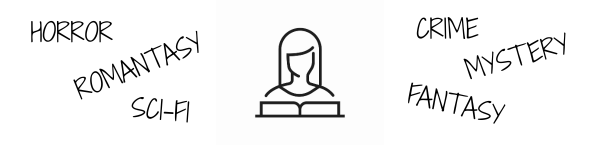
https://stratus.campaign-image.com/images/1166555000002938003_zc_v1_1776270942924_romantasy(1).png

The "Contract": Navigating Licensing in Hybrid Deals

The appeal of the hybrid model is clear: you get professional distribution and editorial polish without the three-year wait of a Big Five house. However, many authors are discovering that while they "own" their copyright, they don’t always "control" their files.


When it comes time to update a manuscript or take a title fully independent, three common licensing hurdles tend to appear:


1. The "File Ransom" Dilemma

Even if a contract states the author retains the copyright, the formatted files (the interior layout and the cover design) often belong to the publisher. If you decide to go solo, you may find yourself owning the words but having to pay a "buyout fee" for the PDF and ePub files—or worse, having to pay a designer to recreate them from scratch.


2. Termination and Reversion Gaps

Standard hybrid contracts often include a "term of license" (e.g., 3 to 7 years). The challenge arises when an author wants to leave early. "Termination for convenience" clauses are rare; usually, you are locked in unless the publisher fails to pay royalties. If you want to "go solo" before the clock runs out, you may be stuck in a legal waiting room while your marketing momentum cools.


3. The ISBN Trap

In many hybrid arrangements, the publisher provides the ISBN. Legally, the owner of the ISBN is the "Publisher of Record." If you move the book to your own KDP or IngramSpark account, you cannot take that ISBN with you. This means losing your gathered Amazon reviews, sales rankings, and "bought together" data—forcing you to essentially relaunch the book from zero.


Takeaway

Before signing, authors must ask: “If I walk away tomorrow, what exactly do I take with me?” Hybrid publishing is a partnership, but like any good partnership, you need a clear, affordable "pre-nuptial agreement" regarding your digital assets and distribution rights.

Negotiating Your Contract Rights

If your publisher hands you a "standard" contract, remember that "standard" is just another word for "advantageous to them." Here are the three lines every technical or academic author should consider striking or modifying:


1. The AI Opt-Out

The Clause: "Publisher shall have the right to license the Work for use in machine learning, large language models, or artificial intelligence training."

  • The Fix: Strike this entirely or change it to: "Subject to the Author’s prior written consent on a case-by-case basis."

  • The Goal: Prevents your specialized technical knowledge from being "swallowed" by a model without your permission (or a share of the licensing fee).


2. File Ownership & Portability

The Clause: "All production files, including XML tagging and formatted PDFs, remain the sole property of the Publisher."

  • The Fix: Add: "Upon termination of this agreement, Publisher shall provide Author with the final XML and ePub files at no cost, or for a pre-negotiated nominal fee not to exceed $150."

  • The Goal: Prevents "file ransom" when you want to take your book solo or update it later.


3. Non-Exclusive Data Rights

The Clause: "Author grants Publisher an exclusive license to the Work and all underlying data/research provided."

  • The Fix: Change "exclusive" to "non-exclusive" specifically for the data, code, and research.

  • The Goal: Ensures you can reuse your own scripts, XML schemas, or raw data for future articles or software projects without asking for permission.

Before you sign, ask yourself:


[ ] Do I own the ISBN?

[ ] Can I opt out of AI training?

[ ] Do I get my XML files back if we "break up"?

[ ]  Do I have the right to veto a new edition or a "revised" version if the publisher uses an outside editor who compromises the technical accuracy of my work? 

[ ] Are my royalties calculated on the List Price (the price on the cover) or Net Receipts (the money the publisher actually receives after heavy discounts)? 


For more information on contracts, 


Traditional/Trade The Authors Guild

Academic/Technical Authors Alliance

Hybrid/Indie IBPA Hybrid Criteria

UK/International Society of Authors

     
https://stratus.campaign-image.com/images/1166555000002938003_zc_v1_1776275308424_untitled_(600_x_150_px).png

Sensitivity Readers: An Important Step in Promoting Diversity?


Representation matters. This isn’t a debate. It’s factual statement that reverberates through any artistic medium, especially literature. When a reader sees a character like them in a story, it can awaken new possibilities in them, especially young readers from marginalized communities. But, how do you make sure that representation is accurate and positive?

In recent years, the role of the sensitivity reader has moved from a niche publishing practice to a widely discussed—and sometimes hotly debated—part of the writing process. Sensitivity readers sit at the intersection of craft and culture. They are not censors, nor are they there to sanitize art. Rather, they are professionals who help writers tell better, more accurate, and more responsible stories.


Read the blog


Project Spotlight


Front cover of the book titled Happier Longevity. The cover features a large, detailed yellow sunflower filling the upper portion, with green leaves below. The background is light and warm-toned. Text on the cover includes the subtitle “A joyful approach to deep health and weight loss” and the authors’ names, Anne Jirsch and Tricia Miller.

Technica was thrilled to work with the National Academy of Medicine (nam.edu) on its Climate & Health Impact Report: Going Farther Together. Technica managed complete production services for this project, including cover and page design, composition and layout, and graphic creation. The report was recently highlighted in a Forbes article written by former U.S. senator, Bill Frist.

https://stratus.campaign-image.com/images/1166555000002938003_zc_v1_1704935276453_technicaeditorial_ipba_banners_(1).jpg

Looking to finally finish that manuscript youve been working on? Take the next step. Technica Editorial offers editorial support including copyediting, developmental editing, interior page layout and design, cover art, and more.

Contact us!

Seeking additional guidance or inspiration? Explore our Resources for downloadable author guides and tools!


Follow Us On