Go directly to the Big Five, do not pass GO, who’s to say on the two hundred dollars.
Introduction
For over sixty years, publishing has increasingly evolved into a business dominated by monopolies. Smaller bookstores have often been put out of business or absorbed into larger bookstore chains, bigger businesses have been able to influence readers through advertising and data tracking. The publishing monopolies have risen to become behemoths and have trampled smaller publishers in the wake of larger and richer competition.
The Rise of the Big Five
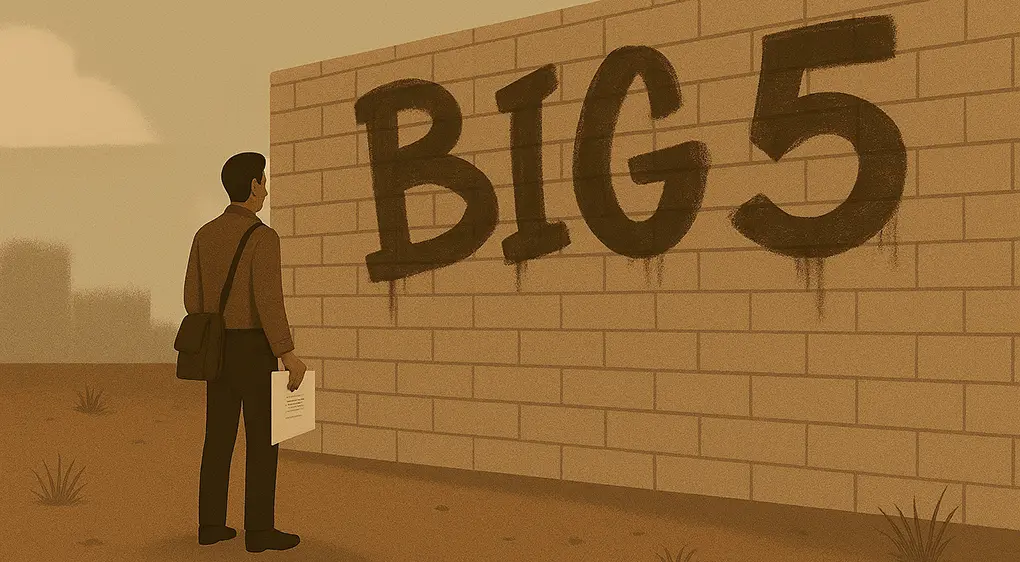
The “Big Five”, as they are known in the world of publishing and writing, are the publishing houses Penguin Random House, Hachette, HarperCollins, Macmillan, and Simon & Schuster. But within those houses are several subcategories; the merger of Penguin Books and Random House Books in 2013 created a publishing powerhouse, and even within these two separate-then-united houses are different imprints, such as Ballantine Books, Knopf Doubleday, Random House Children’s Books, and more. Hachette imprints include Basic Books Group and Workman Publishing—with several further subdivisions within imprints.
Independent Publishers: Holding Ground
Multiple independent publishers still exist, Quirk Books and Unnamed Press as two smaller but successful examples. W. W. Norton is a larger independent house, employee-owned (fostering worker loyalty), and able to stay financially cushioned due to an academia section in its publications. However, these stand out as exceptions, especially when put in contrast to the power of big names for published books.
Authorship in a Conglomerated Industry
Being an author in a world full of conglomeration has its effects on the perceptions and promotions of authorship. Some names are prominent enough that they automatically attract attention and interest in their own right, rather than drawing attention to the invisible hands of editors, publishers, and company—the latter prefers it that way; there is better imagery for the consumer that creative offspring is the product of one mind only. Publishers are also aware of how “the next The Hitchhiker’s Guide to the Galaxy” will attract the attention of readers, of how a book series can help build sales numbers, how authors can successfully revitalize a genre where more authors can find a niche. When profit becomes a major facet to choosing what books to publish in a conglomerated industry, the risk of quality decreasing distinctly increases.
Format, Medium, and Mass Market: Shaping What Gets Published
The mediums in which books have been published have also seriously affected what books get published and what books get popular in what medium they’re published in.
Genre vs Literary Fiction: Market Dynamics
The mass-market paperback edition helped books fly off the shelves, off a vast variety of shelves that weren’t necessarily bookstore shelves, into the hands of a larger crowd of readers than ever (thanks to higher wages and a larger percentage of college graduates), after WWII. Mass-market paperbacks helped bring fantasy to popular life, beginning in the mid-1960s with editions of The Lord of the Rings (first put in print in the 1950s), and then fully taking off around the mid-1970s. Genre/speculative fiction, largely regarded as a “lesser” category of books, is frequently published in mass-market editions. The appeal that keeps these editions in print, even on a much smaller scale than their golden days, is based on them being cheaper than a larger book edition and much easier to carry around or fit into a crowded bookshelf.
The rise of eBook readers fully ushered in the fall of mass-market paperbacks for sharing that appeal. Yet, despite initial fears in 2007-2008 (after the Kindle hit the market, and eBook sales rose), the eBook did not kill the print book star. There was a fast and brief rise of eBook sales, but it began to level off around 2012, as readers largely chose to stick with print. There is a place for both eBooks and print books on the shelves, just as the growth of audiobooks (with companies such as Audible) allows for a balance of mutual eyes-and-ears attention occupation.
Mass-marketed books helped bring what would become major author names to the attention of the world, even when authors, readers, and markets began to outgrow these paperbacks as a popular format. Whether it was romance, sci-fi, fantasy, or mystery/thriller, the (supposedly) formulaic conventions of the genre created a preexisting appeal for readers already interested in that genre, and the popularity made them easy to sell, whether buying from the grocery store stand, in an airport as flight fare, the latest wave of a bestseller, or more. Mass-producing writers like James Patterson, Danielle Steel, and Stephen King—especially when they produced much larger books—offered an easier categorization, and their names were passed around as much as their books. “Literary fiction”, as supposedly separate from genre fiction, is more niche (and, accordingly, also more expensive). Yet over time, there has been a greater intermingling of genre with literary, with books such as Beloved (1987), Possession (1990), or Zone One (2011) as examples that captured public interest and inspired authors.
Resilience and Motivation in the Publishing Industry
A love of books doesn’t have to die, and doesn’t necessarily, with each merger and new imprint from larger publishers. People clamor for jobs and opportunities that apparently offer them job growth in a personally beloved industry. Publishing and writing are generally not associated (for good reasons) with exceptionally good salaries, and as a result, people who stick with that career and life path are not in it for the money. Some changes in organization or new positions are necessary due to larger outside changes, the need for digital marketers being one example. Authors have good reasons to want their books published by larger houses, including a greater sense of legitimacy, more marketing opportunities, and (hopefully) higher advances. Books and stories and information live on, despite the best efforts of censors and the judgment of the ignorant.
The Risks of Consolidation
However, the danger and risks of publishing monopolies are still looming and very much present. The near-merger of Penguin and Simon & Schuster a few years ago would have made the “Big Five” a “Big Four”, and further consolidated power and influence in the publishing world. Less competition means less variety and potential innovation and more control in the hands of fewer people. Readers will always want and need new books, creators a potential market for their ideas, but they will be stifled in an environment that stifles the potential competition. Those who make an (amateur) business of reading, and those who try to make a business of writing, can only thrive so far in a creative world that is foremost about business, and with fewer other businesses to keep larger companies in check.
Further Reading and Resources
- Read More About Big Fiction in Big Fiction: How Conglomeration Changed the Publishing Industry and American Literature — Dan Sinykin (Columbia University Press)
- Learn Who the Publishing Monopolies Are in Who Are the Big 5 Publishing Houses and Why Are They Merging? — Alyssa Matesic
- Explore Penguin Random House’s Imprint in Imprints — Penguin Random House
- Weighing the Pros and Cons of Publishing Giants inThe Big Deal about Big Publishers — Richard Charkin (Publishing Perspectives)
By Grace Dietz
Grace is an Editorial Assistant at Technica Editorial