
Book Review
Ignorance is not an excuse for a lack of representation, especially with a book like this.
“Identity” is one of the most fascinating and frequently explored concepts in fiction, whether it’s at the forefront of a coming-of-age story, in the background as a protagonist is facing a harsh world, or as a means of categorization. Everyone in the world asks themselves “who am I,” and a character who deals with the same question is much more relatable. However, authors frequently have a difficult time writing characters whose identities/experiences don’t align with their own, and then seriously miss the mark on identity regarding diversity. It’s easy to justify a lack of representation through a lack of relatability when the questions are awkward. It’s hard to look in the mirror and see bias blocks and admit ignorance.
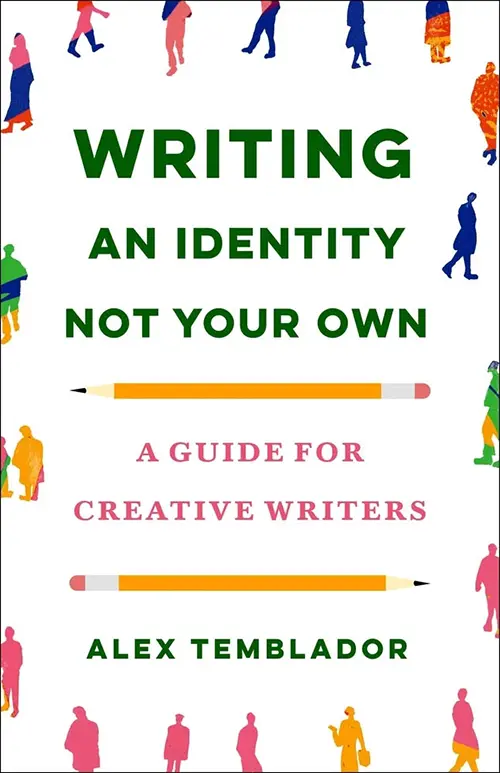
Alex Temblador, through the book Writing an Identity Not Your Own: A Guide for Creative Writers, is determined to fix the problem of representation—specifically, a lack of representation and badly written “diverse” characters.
Identity is fluid, based in the sense of self, shaped by individual experiences and societal systems. And when it comes to identities that experience and are shaped by discrimination/exclusion across different and/or multiple dimensions, it is critical for an author to know what they’re writing about.
Bookstores are full of famously acclaimed novels that are controversial for their harmful stereotyping of marginalized communities and reinforcing prejudices: American Dirt, The Help, and Memoirs of a Geisha are examples. Their authors presumably did not intend to hurt anyone, but their mistakes include lazy and limited research, and the results are flawed and problematic works full of the authors’ unconscious biases. Temblador’s book is ready to help readers/authors recognize their own biases through a QR code link to an Implicit Association Test, and more personal questions to help explore how what media they consumed informed their later opinions.
Research is a simple place to start but a serious challenge to do properly. Temblador makes it easier through a checklist: reading creative works by authors of an identity under scrutiny; exploring historical and cultural research of the community under scrutiny through media such as articles, personal narratives, essays, and more, making sure to gather multiple perspectives and examine the sources for authenticity; building authentic two-way relationships with people within the community under scrutiny, distinctly different from a transactional interview/interviewee relationship, because personal investment builds an understanding of the consequences of exploitation.
The book provides a simple chart as a template to use for characters, keeping track of them and these categories as major facets of identity: race/ethnicity, sexual orientation, gender identity, disabilities, nationality, class, religion, age group, political views, and level of education. This is especially important to write with intersectionality, seeing how the various aspects of identity combine and overlap to better personalize a character’s identity. A universal human constant, being human, helps in ensuring a “base of relatability” to build on when writing.
It’s important to remember that while writing about traditionally marginalized identities: the story does not need to automatically feature or be built upon discrimination. Building stories on “trauma porn” (sometimes known as misery literature; a story strongly focusing on a character’s negative physical/mental/emotional experiences) can be both exploitative and triggering and are not what anyone’s life is built upon. Joy is an equally important part of life. “Basic aspects” of the human experience—finding love, dealing with family problems, trouble with work, keeping friendships, so much more—are easy for everyone to relate to when a character experiences them.
However, when discrimination happens within the narrative, a writer needs a strong sense of sensitivity, respect, and vision. Not every form of discrimination is overt, and understanding how more subtle discrimination (such as microaggressions) works can feed into any “necessary” overt scenes. Institutional/systematic discrimination has been written about multiple times, from fictional worlds to historical narratives, and there are plenty of resources to use for research and learning opportunities. One of the more subtle ways a writer can cause harm is by portraying people of color/certain nationalities as “exotic” – it creates the implication that to be so is abnormal. Slurs and similarly coded language will shock the reader beyond the narrative, so exercising serious caution is necessary.
Language, in the form of dialogue, is a minefield primed by cultural stereotypes used repeatedly. When writing a character speaking a non-English language, writers often italicize its usage to emphasize the difference, furthering the idea that English is somehow the superior language. Dialects (not the same as accents) can also indicate biases, as a character not speaking in “proper English” can emphasize an implication that their background is somehow inferior. Writing speech phonetically, or repeatedly using slang throughout dialogue as a contrast to “proper English”, is something white writers often do with characters of color, and it is a particularly egregious example of dehumanization through dialogue.
Dehumanization through descriptions of a character’s appearance is also common. Comparing skin tones to food (“caramel”, “chocolate”, “brown as a nut”) is further objectification, while using words like “nappy” or “kinky” when it comes to Black hair furthers a sense of difference when compared to the “regular” curly hair. There are forums and blogs dedicated to “men writing women” with many examples of fictional women describing their looks in a sexualized way, or the “objective” narrator (male writer) prioritizing appearance when introducing female characters in contrast to more nuanced introductions of male characters.
But although first drafts should be written with care, it’s during the editing process that the author needs to rewrite an identity not their own. Not necessarily during the first round of edits, which should focus on polishing the story and language, but the following phase(s) should begin focusing on watching for tropes and stereotypes in characterizations and storylines. From examining every scene (or rewriting some entirely), making sure that characters are described the same way, letting the story rest to get a fresh and unbiased perspective, to choosing the right beta/sensitive readers. One of the hardest things for a writer to edit is themselves: to be able to accept their own biases so that they can accept the more personal critiques and distinguish uncomfortable aid from attacks. The book provides a thorough checklist to follow when editing.
“…writing an identity not your own will take a lot of work, and not all writers are willing to do it. Merely reading creative work by writers of that identity is not enough. It requires making human connections with people from the community in which you wish to write. For many writers, their fear, their insecurities, or their inability to put themselves in uncomfortable situations hinders their ability to write a different identity.”
Writing an Identity Not Your Own is Alex Temblador’s gift to authors everywhere: an exhaustive and invigorating how-to guide that will inspire and further your personal and professional growth.
By Grace Dietz
Grace is an Editorial Assistant at Technica Editorial