When an author is first starting out in the scholarly publishing world, he or she likely is eager to get published by as many journals as possible, as quickly as possible. And that’s understandable, given the fierce level of competition that’s going on in today’s publishing world.
Unfortunately, there are some bad actors who are aware of this kind of desperation. And they make it a point to target those authors who fall prey to it—hence, they are known in the business as “predatory publishers.”
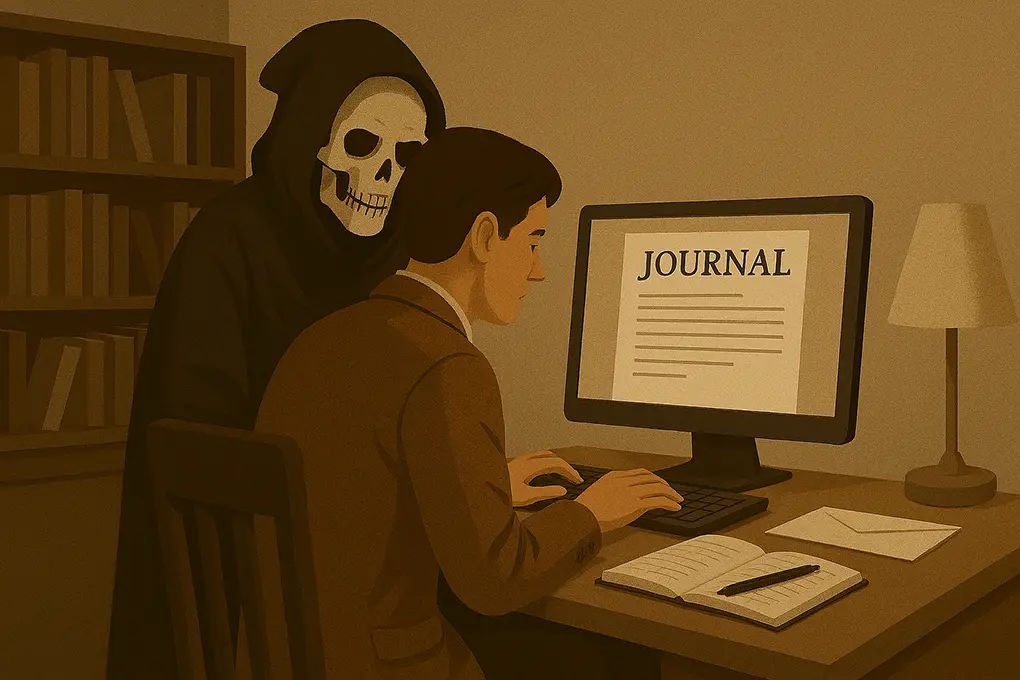
If an author submits a scholarly article to a journal that is run by a known predatory publisher—and that article ends up being published in that journal—it’s inevitably going to be a humiliating experience. So, authors must be acutely aware of the warning signs that a journal could be predatory, and sometimes that can be tricky, especially when the title is similar or the same as a legitimate journal.
Do your homework—a number of red flags exist that might scream “predatory” to an author pursuing publication. These signals include frequent advertisements/solicitations in inboxes, misspellings and/or poor grammar in those solicitations, and a lack of contact information for editorial board members (or, if there is contact information, it lists a generic email address, such as Gmail or Hotmail, instead of an email address associated with a university or science/medical facility). Also, check to see that the journal’s website provides sufficient information about its scope, policies, and procedures.
…But what exactly makes a journal predatory? What clearly differentiates it from other legitimate journals?
There are three main factors that create this distinction. The first is lack of proper peer review. The second is publication times that are so rapid, they’re too good to be true. And finally, there are typically inappropriate fees charged for submissions.
Skipping Over the Essential Steps
For any reputable scientific journal, the peer-review process is crucial—that is, the process by which subject matter experts critique submissions to determine whether or not they are fit for publication in that journal. When it comes to predatory journals, though, one of two things is usually going on: either there’s no one actually conducting a peer-review process (as discussed previously), or the so-called “peer reviewer” is someone with literally no subject matter expertise or credibility whatsoever.
So, before submitting to that journal, it’s a wise idea for an author to first look at the journal’s website to see what the scope of the journal actually entails. If there isn’t a scope description—or if the scope description is extremely broad or wide, with little to no focus on a specific subject area—there’s a very real possibility that the peer-review process doesn’t exist.
Authors might also do some detective work by looking at the list of editors or editorial board members, or if there even is one. When a journal is worth submitting to, the editors and editorial board will generally be comprised of respected members of the scientific community who are fairly well-known. So, when the list of names is full of unknowns, or if there just isn’t a list of names at all, there’s a high chance that the journal isn’t worth submitting to.
The journal’s website must guarantee that its peer review practices are consistent, transparent, and reliable within the realm of scholarly publishing. It should include the following essential sections: aims and scope, research impact, editorial board, submission guidelines, ethical guidelines, review policies (including statements on AI usage and conflicts of interest), copyright and licensing information, open access fees, and details on Indexing and searchability.
The method of submission can also say quite a bit about the rigor (or lack thereof) in the peer-review process. Journals with respected names typically use relatively complex submission system websites to collect candidates for publication, because those are the types of platforms that accommodate all of the materials legitimate peer reviewers will need (such as a cover letter, disclosures, high-quality figures, etc.). Any journal that asks for submissions through a simple email message or form is not going to be able to gather that data, which means it’s highly unlikely to be putting submissions through a meaningful peer-review procedure.
How Fast Is Too Fast?
Every author wants the time from submission to (hopefully) acceptance to be as minimal as possible. But if the turnaround time is too short, something might be wrong.
When, for instance, a journal advertises a decision within no more than a week of submission, the odds point to submissions that are not being properly screened. Obviously, this translates to a journal with zero impact factor—and, more importantly, a journal that’s known in the scientific community as being phony.
Fortunately, there are some pretty easy steps authors can take to avoid falling into this trap. The biggest tip is probably to be skeptical of any publication that publicly boasts—through a bombardment of email solicitations, for example—about a quick turnaround time. While time to decision is, indeed, an important criterium for reputable journals, it’s not so important that they have to go around bragging about it nonstop.
Another helpful tip is to actually look at articles that have already been published in the journal. Are they nearly impossible to read due to poor sentence structure and/or grammatical errors? Do they concern topics that have absolutely nothing to do with the journal’s supposed scope? If the answer to either question is “yes,” trying to submit to that journal is more than likely just asking for trouble—don’t wait until it’s too late to figure that out!
Dollars and Sense
The final factor that makes a journal predatory is charging authors fees just to submit their work. However, this one is a little tricky, because with the rise of open-access publications, there are also legitimate journals that charge submission fees. That means if a journal’s submission guidelines include an upfront submission cost, that by itself doesn’t necessarily put the journal into the “predatory” category.
What it does mean, though, is that before an author writes that check or takes out a credit card, they need to do a little more digging to figure out if it’s going to be money worth spending or essentially a scam.
An experienced author might know the publishing landscape well enough to separate a reputable open-access journal that charges a fee from something more sinister. Someone new to the game, however, probably won’t have this knowledge. It’s therefore crucial to use all of the resources you have at your disposal to do the detective work to make that determination. This might include online searches for the journal’s impact factor or reviews, or perhaps conversations with colleagues, classmates, supervisors, or faculty members. Even if you don’t know whether a fee-charging journal is fishy, if you look hard enough, chances are, at least one person in your circle probably does.
Final Thoughts
Despite the best of intentions, sometimes even the best up-and-coming authors of their fields sometimes become victims of predatory publishing tactics. If that happens, try not to panic—depending on where the paper is in the publishing process, you may have options.
In today’s world, because predatory journals are such a well-known problem, many legitimate journals are willing to work with authors whose work has been accepted by, but not yet published in, a non-reputable journal. As an author, use your supervisors at your institution as a starting point to communicate with these other, legitimate editors to possibly get this process started. You might then be able to get your work published in a journal with actual credentials without being accused of duplicate submission/publication.
Even if a paper has already been published in the predatory journal—and/or if you’ve already paid that illegitimate journal a fee—some degree of recourse might still exist, such as a withdrawal or retraction. This is especially true if no copyright form has exchanged hands yet.
Unfortunately, there are occasions where the paper is published by the predatory journal, and there is, legally speaking, simply no workaround. This is particularly true if copyright has already been transferred; once that takes place, as an author, you’re likely to be dead in the water.
But even if that does happen, it absolutely does not have to be the end of the world. Yes, it’s embarrassing, but it certainly won’t mean your other work will be forever banned from prestigious publications. Consider it a valuable lesson learned and move on to the next paper—and this time, you’ll be armed with a wealth of knowledge about the right and wrong people and places to submit to!
Sources:
- Predatory Journals. . https://www.predatoryjournals.org/
- Beall’s List of Potential Predatory Journals and Publishers. BeallsList.net. https://beallslist.net/
- Steps to Take If You Have Mistakenly Submitted to a Predatory Journal. CWAuthors. https://www.cwauthors.com/article/steps-to-take-if-you-have-mistakenly-submitted-to-a-predatory-journal
- Withdrawal of Accepted Manuscript from a Predatory Journal. Committee on Publication Ethics (COPE). https://publicationethics.org/guidance/case/withdrawal-accepted-manuscript-predatory-journal
- Withdrawing an Article from a Predatory Journal to Resubmit Elsewhere. Committee on Publication Ethics (COPE). https://publicationethics.org/guidance/cope-position/withdrawing-article-predatory-journal-resubmit-elsewhere
- MD Anderson Library FAQ: Predatory Journals. https://mdanderson.libanswers.com/faq/206446
By Anne Brenner
Anne is an Assistant Managing Editor at Technica Editorial