Currently, most journals require at least two peer reviewers per manuscript. While specific criteria vary per publisher, a core requirement for reviewers is that they are expected to have subject-matter expertise that is relevant to the manuscript in which they are reviewing. With the expansion of available journals online, reviewer fatigue is ramping up, and editors are struggling with the evolving problem of finding suitable and available reviewers.
In this day and time, payment for reviews is rare or non-existent. Publishers, instead, tend to provide recognition or sometimes discounts toward a processing charge for open-access journals. Recognition can be in the form of certificates, or an annual “thank you” list that may be published on the journal website or in-print. Historically, peer-reviewers reviewed manuscripts to gain professional recognition, visibility, or experience in their field. While this is still true and valuable, the bigger question beginning to formulate is how editors and publishers can retain and grow valuable reviewers for their journals in a market that is rapidly evolving.
A few ideas have been presented in conversations regarding the future of peer review:
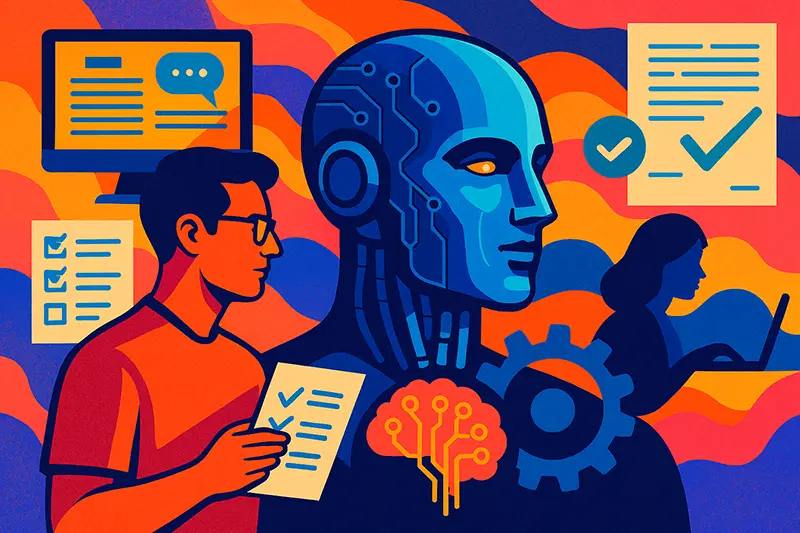
- AI Integration: Artificial Intelligence has intertwined its way into most facets of the workforce with publishing being no exception. AI-powered screening engines are becoming increasingly popular to help flag potential ethical issues, such as conflicts of interest, and to help match submissions with appropriate reviewers.
- One example of this is Elsevier’s Reviewer Recommendation tool. A video on how to use the reviewer recommender on Editorial Manager can be found here.
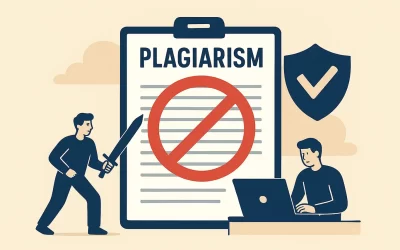
- There are various plagiarism detectors such as iThenticate, Copyleaks, and GPTZero to assist editors in recognizing whether a paper is plagiarized or potentially written by AI.
- Paperpal Preflight is another tool some publishers use to screen manuscripts to assist authors in preparing their manuscripts for submission and publication.
- Editorial fellowships for early-career scholars
- Some journals are implementing new strategies like editorial fellowships for early-career scholars. This implementation may vary per publisher, but the idea is that seasoned scholars will be paired with early-career scholars for a set number of time to learn how to properly peer review. After the window has closed, the early-career scholars will be able to submit peer reviews on their own.
- Open and post-publication peer review
- Another concept that has come up is open and post-publication peer review. Journals can vary in their transparency for peer review. Some journals are double blind, which means that both the author and the reviewers remain anonymous to one another. Other journals might opt for a single-blind review. This is where the reviewers know the identities of the authors. For transparency purposes, discussion around “open” peer review has come up. This type of review is meant to promote transparency and create a more collaborative process in academic publishing with more opportunity for engagement. There are two types of post-publication peer review. Primary PPPR is for published manuscripts that have not undergone any prior peer review. The second is Secondary PPPR: This is for published manuscripts that have undergone traditional peer review but is open to receiving additional peer review after publication.
While these are just a few examples, it is clear the future of peer review and its current process is on a pathway to change. The hot topic that is currently trending is AI’s integration into the peer review process – with a glimpse into AI possibly being considered as peer review itself. With the evolution of AI, one can only wonder about its impact on academia and what its place might look like in the future.
In a news story titled “At futuristic meeting, AIs took the lead in producing and reviewing all the studies”, Jeffrey Brainard discussed a presentation by Agents4Science of 48 papers that were required to use and list AI as a lead author. These manuscripts were to be assessed by AIs acting as reviewers, as well as human reviewers.
Brainard discussed that the organizers “hope a fuller embrace of AI could accelerate science—and ease the burden on peer reviewers facing a ballooning number of manuscripts submitted to journals and conferences.” While the article focuses on AIs role as a lead author, it also specified that “conference organizers plan to publish an analysis comparing the AI- and human-written reviews they received on each proposal,” with Brainard indicating that disagreement between human and AI reviewers was already apparent in one paper, noting that “an AI reviewer called it ‘profound.’ But a human deemed it ‘an interesting proof-of-concept study with some lingering questions.’”
The debate for the involvement of AI is just beginning, but presentations such as this one shine a spotlight into how AI may integrate into the future of the peer review and authorship process.
Overall, the discourse around the current review process focuses on peer review burnout and editor’s struggle to find suitable peer reviewers with the ever-growing number of journals out today. While some solutions like editorial fellowship and open peer-review seem to be catching, the largest spotlight currently seems to be on AI and how this will impact scientific research and analysis in the future. While the answer may not be clear at present, it is evident that the future of peer review will continue to evolve and that scholarly publishers and editors alike are keeping a close eye on the development!
By Emma Montes
Emma is an Editorial Assistant at Technica Editorial