
Judith Jones’ inconspicuous touch but enduring work in publishing.
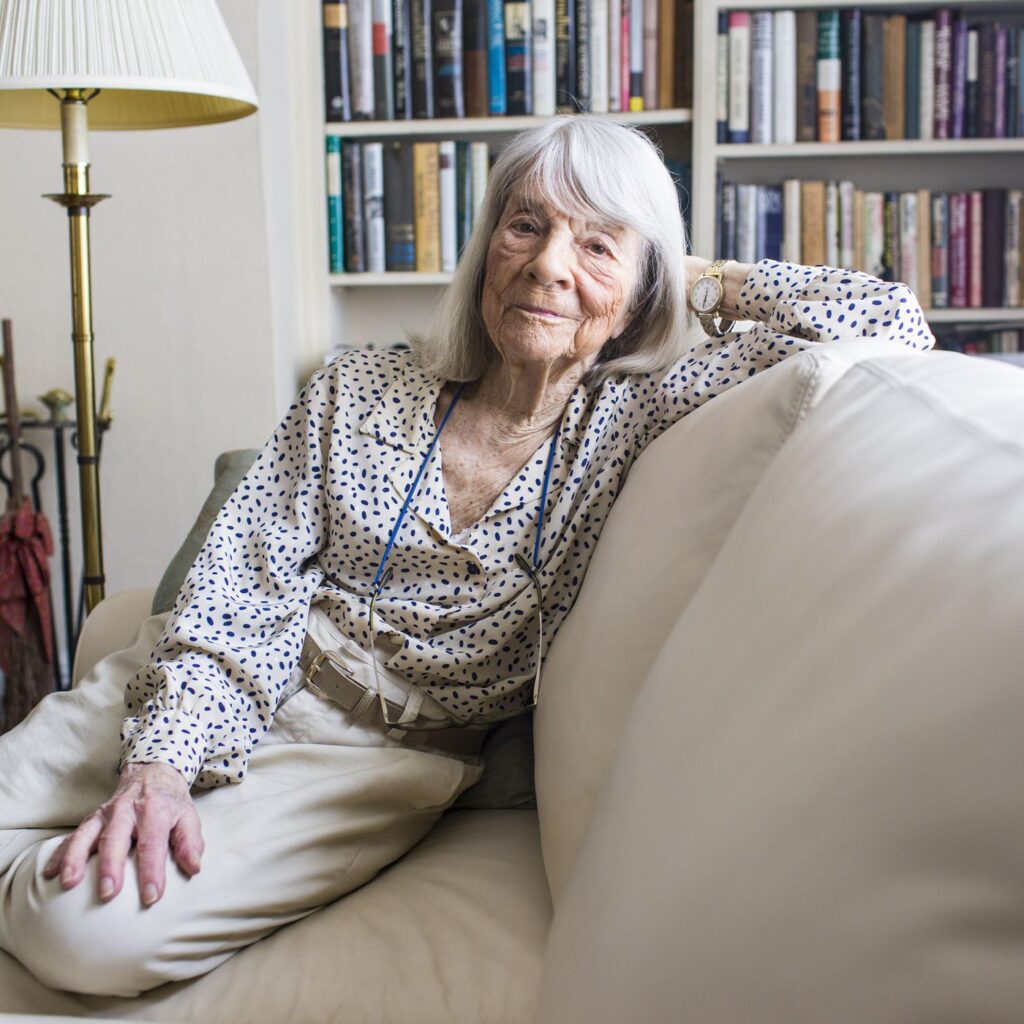
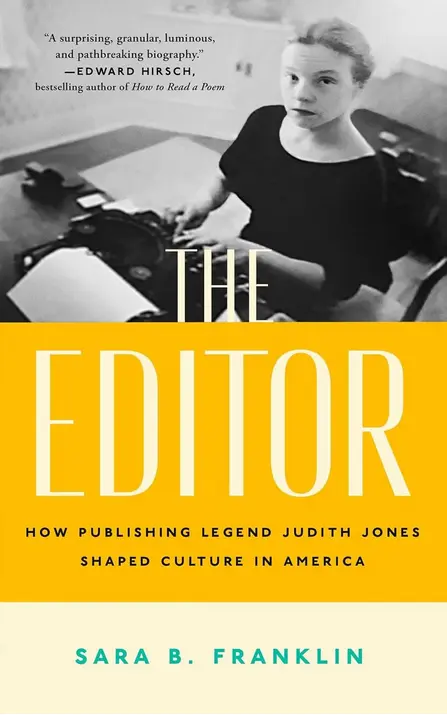
Judith Jones started her career in publishing at seventeen years old and continued to work for almost seventy years. Her professional life saw sweeping changes across the world of publishing, and, lucky enough to be positioned and primed to work at opportune times, she also shaped several authors and genres as an editor. Sara B. Franklin, author of the thorough and insightful biography The Editor: How Publishing Legend Judith Jones Shaped Culture in America, thoroughly details history and personality side-by-side.
Judith Bailey was fortunate to have the opportunity while a student at Bennington College to work at the then-largest publisher in the country, Doubleday, Doran & Company, at a time when publishing was becoming a major industry. Doubleday itself had several retail bookstores, a mail-order business, and a large robust book club operation. At this time, various publishing houses were adopting new strategies of royalties and advances for authors, while literary agents were playing a significant role as intermediaries between authors and publishers.
In 1942, as many men were heading to war, Judith was spared from the role of secretary, which gave her the opportunity to work in editing. However, her time there was short, starting in the winter of 1942 and ending in March 1943, but her boss at the time, Ken McCormick, was sad to see her leave and wrote that he was deeply impressed with her work.
She returned to work at Doubleday in 1947, two years after graduating college, and entered a world suspicious of independent working women. Judith was one of only three women then working at Doubleday who were not secretaries. these three were also largely handling the work of other editors in reviewing submitted manuscripts as opposed to building their own bases of authors.
In the wake of the war’s end, Doubleday was still the reigning champion in the publishing industry, and the publishing industry continued to have success. Paperback books had become popular across the seas in World War II, and a booming economy combined with cheaper paperbacks made books selling even more popular.
In 1948, Judith was living and working in Paris, initially for Weekend magazine. Unfortunately, the magazine went under there in early 1949. She was fortunate to then find herself working at Doubleday’s first Paris outpost under the head editor, albeit as a secretary. One of the manuscripts she had the chance to see was Anne Frank’s diary, which had already been published in some other countries but still hadn’t been published in America. Judith argued a successful case for what ended up being an extremely successful book on its release, although her boss in Paris did not give her the appropriate credit she deserved.
In Paris, she also met and married Richard “Dick” Evan Jones, who shared her interests in books and publishing. Together, as a couple in the City of Love, they would grow to love cooking. They were married in 1951 and returned to America shortly thereafter. The now-Judith Jones began working at a literary agency in America, a job that she found extremely satisfying, having briefly established her own literary agency while still working for Doubleday in Paris.
The 1950s book world was full of new voices and perspectives from rising authors, although this did not translate to the publishing world; most women were not pursuing careers in the 1950s, and publishing was still seen as predominantly a man’s job.
This made the Alfred A. Knopf publishing house even more unique, as it was co-founded by both Alfred Knopf and his wife Blanche. Blanche herself argued for Knopf to publish The Diary of a Young Girl and regretted deeply that they’d turned down what ended up being a competitor’s success. When Judith Jones came to Knopf in 1957 with her credentials and role in publishing The Diary, Blanche hired her as an editor, eventually furthering her editorial career.
The 1950s consumer culture emphasized shopping over baking, and the “genre” of cookbooks was neither respected nor perceived as literary. But toward the end of1959, a potentially game-changing cookbook came Judith’s way: Julia Child’s Mastering the Art of French Cooking. The combination of Alfred Knopf’s being an amateur food connoisseur and an ally in the form of publishing veteran and food lover Angus Cameron won Judith the opportunity to edit what was a very real publishing risk.
It was that risk that required Judith to use all the editor’s necessary abilities and skills. Outright editing the book meant reorganization, clarification of the recipes, serving as a test subject for the audience, and full-on involvement and participation with the author while never controlling or impinging on the author’s vision or voice. Then, when the book was finished, it was time to build interest. Judith tracked down and contacted the right people (the food editor in the New York Times) to get mass-reaching print reviews in time for the release of Mastering the Art of French Cooking in October 1961. Timing also played an enormous role in the book’s success, as the glamorous new First Lady Jackie Kennedy had hired a Frenchman to serve as White House chef just months before the book was released. The Today Show also offered the opportunity for Julia Child to do a live spot on TV and that spot promoted the book to a wide audience. Further publicity was arranged by Knopf through a book tour, editors going along with the authors, and Judith-as-editor continuing to contact the right people to get the word out and expand the book’s reach.
Judith was still working with several other authors. In 1963, she edited the debut novel of Anne Tyler, furthering her sense of her own worth to Knopf, while also working with author John Updike. In 1967, she finally had a “room with a view” with her new office, complete with a window and a secretary that she shared with another employee.
The success of Julia Child’s first book brought on greater interest in cookbooks on “specialty” cuisine in the late 1960s to early 1970s, which paved the way for further books in the following years, and Judith’s success with the first volume of Mastering the Art of French Cooking meant that she was naturally the choice to edit others. She worked on Julia Child’s next book, then A Book of Middle Eastern Food, The Vegetarian Epicure, and more. In 1975-1976, the cookbook on “American” country food by Black author Edna Lewis, The Taste of Country Cooking, synchronized neatly with the celebration of America’s 200th anniversary. The Taste showcased that American food meant a wide range of diversity, and Judith made sure to include cultural history, even some literature, in a book that she felt was about much more than food.
Barnes and Noble purchased the indie bookstore chain of Doubleday bookstores in 1987, and several other major bookstore chains continued to “snap up” the smaller ones. Major book publishers had been absorbing the smaller ones for a while, as Knopf—though retaining its own character and editorial department—was purchased by Random House in 1960, but the 1980s saw even more absorption of publishers. Judith had foreseen this outcome but was deeply frustrated by what she perceived as the lack of opportunities for smaller books in a world of big names and houses.
In 1987, however, Judith got her “big break” when Sonny Mehta became editor-in-chief at Knopf. He was aware of her worth as an editor to literary authors, rather than “simply” cookbooks, and she rose in the company accordingly. She became VP at Knopf under him and thus had more editorial freedom and license with a significant raise. However, that raise was still not proportional to her authors’, or her own, output, and it was not in comparison to men in publishing, who continued to have larger salaries than women at the time.
Judith turned 80 in March 2004, and was still working. In 2005, she wrote an essay for Vogue in which she noted that she hadn’t retired because she wanted to fully appreciate her work and life, refusing to feel ashamed of aging. Two years later, she published her memoir The Tenth Muse: My Life in Food. It wasn’t until 2011 that Judith, the senior editor and VP at Knopf, finally retired.
Judith Jones died in August 2017, commemorated at the time by newspapers such as the New York Times, the Washington Post, and the Los Angeles Times as both personally beloved and an “extraordinary editor.” Sara B. Franklin, years later, fully and intimately brings both aspects of Judith to life in The Editor. This biography is a must-read for anyone who needs to be dissuaded of their supposed publishing expertise and for everyone who wants a great and greatly knowledgeable read.
The Editor will be released in paperback on April 22, 2025; order it and support independent bookstores through https://bookshop.org/p/books/the-editor-how-judith-jones-shaped-food-and-culture-in-america/18897522?ean=9781982134372&next=t
By: Grace Dietz
Grace is an Editorial Assistant at Technica Editorial