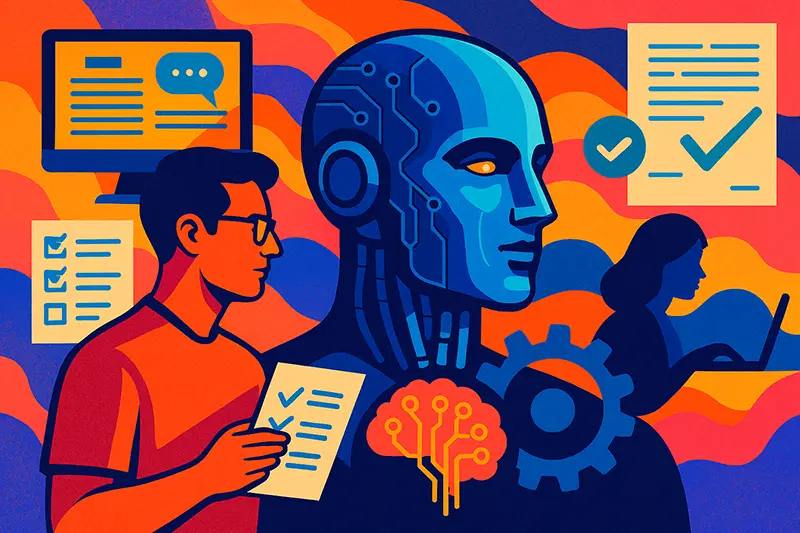
 Currently, most journals require at least two peer reviewers per manuscript. While specific criteria vary per publisher, a core requirement for reviewers is that they are expected to have subject-matter expertise that is relevant to the manuscript in which they are...
 Artificial Intelligence represents computational systems’ capability to execute tasks usually associated with human intelligence. Generative artificial intelligence (generative AI) is a form of artificial intelligence that learns from existing data to generate new,...
 The use of AI in scholarly publishing has come a long way from spellcheckers or plagiarism detectors. AI is now helping editors find reviewers, summarizing submissions, and even drafting review comments. In some conferences and journals, AI-generated feedback is...
 AI Is Everywhere The publishing realm—included, but certainly not limited to, scholarly publishing—is morphing before our eyes. Among many other changes, that means substantial change to the peer-review system that authors have grown to know over the past several...
 AI has revolutionized countless industries, from healthcare to finance to education to the publishing industry. Among the latest applications is AI text detection software, which aims to determine whether a given piece of text was written by a human or generated by an...