| |
|
|
|
|
February marks national observances of Black History Month, International Day of Women and Girls in Science, and the Lunar New Year. Technica continues to support inclusivity and the richness it brings to our writing community.
This month, we’ll further develop your writing skills by delving into the importance of conveying your characters’ emotions, an essential aspect of driving the story forward and connecting with your reader. We touch the shift from SEO to GEO, and how AI is changing how we
contextualize
our content to improve visibility to generative AI systems. We also explore the ways engagement platforms are enhancing authors’ reach and fostering loyal readerships. Discover how these tools can help you connect with your audience on a deeper level and cultivate a community of devoted fans.
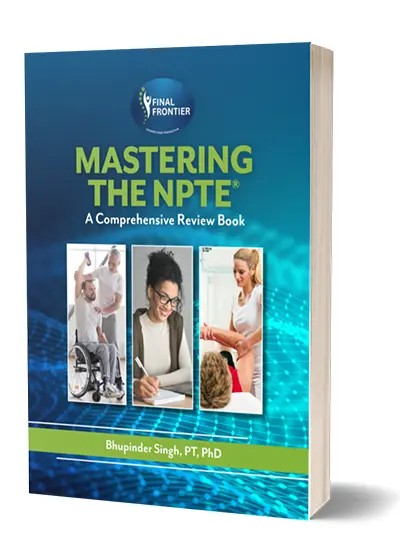
Our project spotlight is the updated edition of Mastering the NPTE: A Comprehensive Review Book published by Final Frontier Press.
Join us as we delve into these essential strategies for success in the literary world!
|
|
|
|
How to Underwrite, Rather Than Overwrite
Emotion |
|
It’s February, so let’s talk about feelings!
No, not your feelings, although those are important, too. Today we want to chat about your characters’ feelings. Those feelings that are supposed to drive the story, deepen the scene, and connect with the reader on a soulful level. Sometimes, though, they end up sounding either flat, forced, or way too dramatic, right?
If that sounds familiar, you’re not alone. Getting character feelings right can be one of the trickiest parts of storytelling. As writers, we’re often told emotion is what makes writing resonate, but when not handled carefully, or with intention, emotion either disappears into the background or, worse, turns melodramatic. Here at Technica Editorial, we’ve seen both extremes:
—> Manuscripts where important
emotional beats are rushed or vague (“She was sad.”)
—>
Manuscripts where emotion is overexplained, overwrought, and/or repeated until
it loses all impact Neither of these is desirable, so how do you strike the balance? How do you write true emotion without drowning your reader in italics, internal monologues, and trembling hands
oh my!? There are five ways you can get to the heart of the matter:
1. Get Underneath the Obvious
2. Use Restraint for Power
3. Let the Reader Do Some Work
4. Anchor Emotion in Specifics
5. Let Emotion Change the Scene
These are all powerful concepts that can help you tap into character emotion in a way that will resonate with readers. Let’s explore them more deeply:
Tip #1: Get Underneath the Obvious
Real emotion in fiction doesn’t usually come from writing the emotion itself. It comes from writing what it feels like. That means how it lands in the body, how it changes behavior, and/or how it surprises even the character. Essentially, it’s showing versus telling. Watch these two videos to clarify the concept:
Video 1 and
Video 2. For example:
❌ “He was angry.” This is telling the reader the emotion, but we have no context for it. ✅ “His jaw clenched, and he didn’t trust himself to speak.” This works so much better because we’re seeing the character’s body react, and we’re getting into deep POV. Check out this video on deep POV. You don’t want to simply say he’s angry. We need to see it. We need to feel it. So, think less about naming the emotion, and more about:
- What the character notices
- What the character doesn’t do (because of the feeling)
- What emotion costs them in the moment
Tip #2: Use Restraint for Power Sometimes, the strongest emotional moments are the quietest. Think of the moment after the fight. The silence in the kitchen. The one line of dialogue that changes everything. The action a character almost takes and then doesn’t. You don’t need pages of internal monologue to show that something matters. Sometimes, one well-placed sentence does the heavy lifting. Try this exercise:
Find a moment in your manuscript where you’ve overwritten emotion. Highlight the paragraph. Now see if you can say the same thing—but here’s the trick—do it in one line. Then read it aloud. Nine times out of ten, it will land with more power. Tip #3: Let the Reader Do Some of the Work
Here’s a little-known secret: Readers like to fill in the blanks. It’s true, so let them do some of the work! They don’t need every feeling spelled out. They need just enough so they trust your character, enough to feel something stir inside of them. When you leave just a little space, the reader can fill in and that’s where the connection happens. Tip #4: Anchor Emotion in Specifics
Emotion hits harder when it’s grounded in something tangible and relatable. → The way someone says her name, maybe too soft, too careful, too loud, etc.
→
A smell that takes her back → A song lyric muttered under his breath → A photograph shoved in a drawer
These are the details that clue us in without explicit explanation
(i.e., telling). Tip #5: Let Emotion Change the Scene
Emotion shouldn’t just sit there. It needs to actually do something. As you write, ask yourself:
- How does this feeling change the decision the character makes?
- How does it shift the power in the scene?
- How does it deepen or fracture a relationship?
If a character’s emotion is just background noise, it’s not doing its job. If it changes the direction of the story…even in a very subtle way…then it earns its place. Big Takeaway
Here’s what we want you to remember: Emotion isn’t a performance. Rather, it’s a quiet current of electricity running just underneath what your characters say and do. The best emotional writing gives the reader just enough to feel it in their own chest without ever needing to be told what to feel. So, keep this in mind: The more you trust yourself to underwrite emotion rather than overwrite it, the more powerful it becomes. Want feedback on an emotional scene you’re working on or help deepening emotional stakes across a manuscript? That’s exactly the kind of work we love. Contact us to book a session.
|
|
|
|
|
|
|
|
✍🏽Check out our editorial support services, as well as a variety of author resources. Click here.
|
|
|
|
Writer. Editor. Marketer. Now What?
From SEO to GEO: A New Lens for Authors
|
|
For years, authors were told to think about SEO (Search Engine Optimization) — keywords, rankings, and getting found on Google. But the landscape is shifting. We’re now entering the era of GEO (Generative Engine Optimization) — optimizing your content not just for search engines, but for AI-driven tools that generate answers, summaries, and recommendations.
What “Contextual” Means in GEO
In GEO, contextual means your content does not stand alone as isolated keywords — it clearly communicates who it’s for, what it addresses, why it matters, and how it fits into a larger body of knowledge. So, instead of saying, “This book explores leadership,” you specify:
“This book examines ethical leadership in nonprofit healthcare organizations, with case studies from rural hospital systems.”
What does that mean for you as an author? It means your website copy, book descriptions, blog posts, podcast interviews, and even your metadata need to do more than rank — they need to be written just as someone might search for them, but structured so AI systems can easily pull from them. The more specific, consistent, and expertise-driven your content is, the more likely it is to be cited, summarized, or recommended in AI-generated responses.
They say this isn’t about gaming another algorithm. But, in short, it’s about gaming GEO. It will require going back through your content (from your website, to your author bio, to your backlist) and updating it to comply with this new GEO reality.
In short: visibility is no longer just about search. It’s about the skill of posing the right context in a generative world.
|
|
|
|
|
|
How Writers Can Use Engagement Platforms to Build a Loyal Audience
|
|
As a writer, what platforms are you using to promote your work? As an
editor and a small-business person, I am always exploring the best ways
to promote our editorial services and engage with clients. It can feel
overwhelming at times, but over the years I’ve learned that doing a bit
of research and choosing the right platform can make all the difference.
What we all want, ultimately, is to attract readers and clients,
build our community, and hopefully turn our passions into a sustainable
income. While there are countless options out there, I’ve come to
realize that the best choice truly depends on your individual needs and
goals. From Ko-fi to Patreon to TikTok and Substack, each platform
offers unique features that cater to different types of creators. Below
is a quick snapshot comparing some of the most popular writer-engagement
platforms to help you decide where to focus your energy:
Read on…
|
|
|
|
|
|
|
|
Updated Edition: Mastering the NPTE: A Comprehensive Review Book
published by Final Frontier Press
|
|
Technica Editorial was excited to partner once again with our friends at Final Frontier, a study program that prepares PT students to take and pass the NPTE. We edited the updated manuscript copy for a new edition of their premier study guide, Mastering the NPTE, edited by Bhupinder Singh, PT, PhD.
|
|
|
|
|
|
Looking to finally finish that manuscript you’ve been working on? Take the next step. Technica Editorial offers editorial support including copyediting, developmental editing, interior page layout and design, cover art, and more. Contact us! |
|
|
|
|
|
Seeking additional guidance or inspiration?
Explore our Resources for downloadable author guides and tools! |
|
|
|
|
|
|
|
|
|
|
|
|
|
|
|
|


.png)